Vastu Shastra, "the science of dwelling", is a traditional Indian system for planning a home in harmony with the five elements and the directions. It is meant to support comfort, health and peace of mind. It works best as a practical guide to light, air and layout, not as a guarantee.
Key takeaways
- Vastu rests on the five elements (earth, water, fire, air, space) and eight directions.
- The northeast corner is traditionally kept open, light and clean.
- Many Vastu guidelines also match common sense: good light, ventilation and uncluttered space.
- In rented homes and apartments, small adjustments are usually possible without any construction.
The foundation: five elements and eight directions
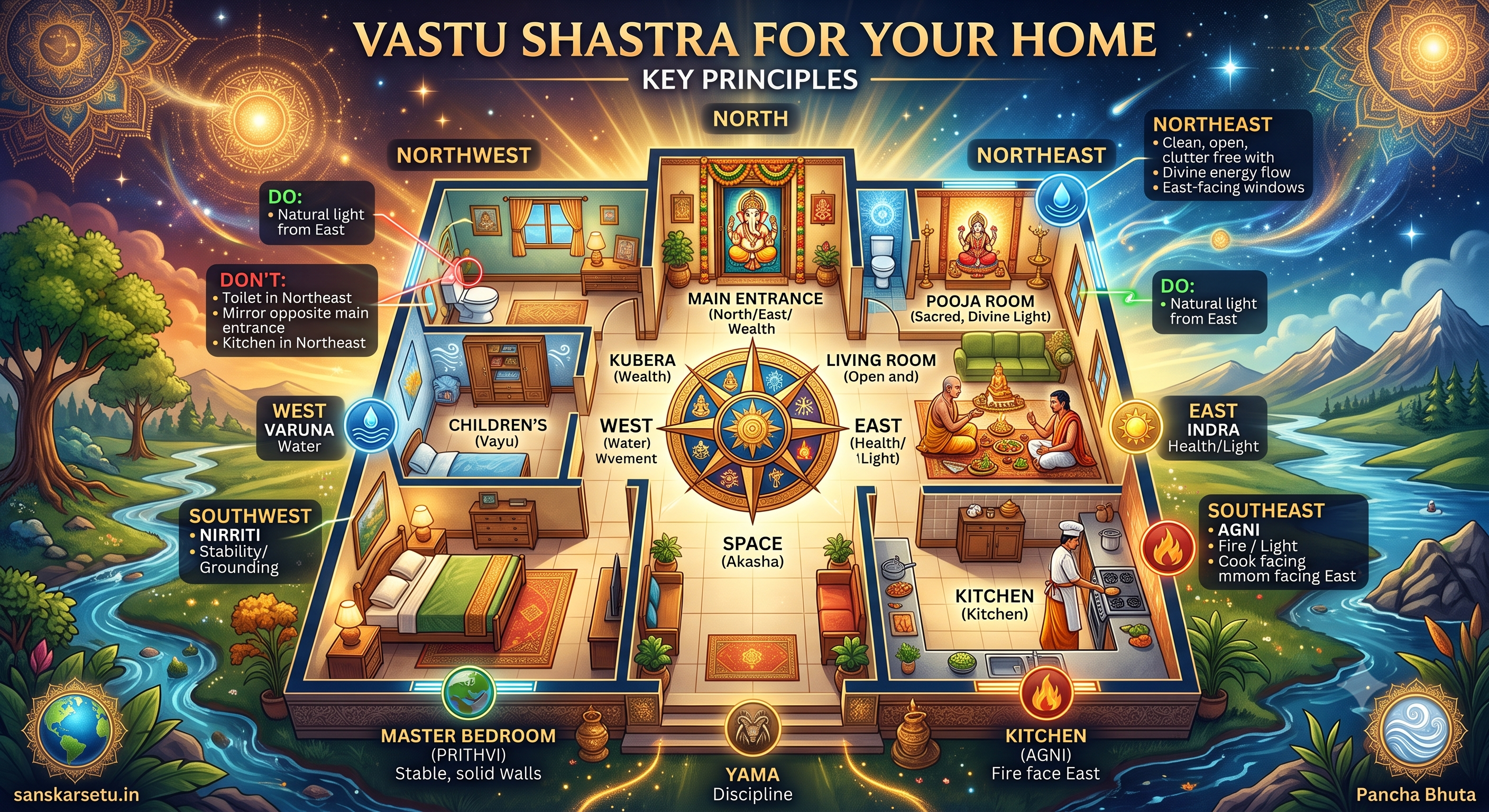
Vastu is based on the Pancha Bhuta, the five elements of earth, water, fire, air and space. Each of the eight directions is linked with a deity and an element. The aim is to place rooms, objects and activities so that they suit these associations. The centre of a home, the Brahmasthan, is traditionally kept open.
Principles by room
- Main entrance: north, east or northeast is generally preferred, with the door opening inward and kept well lit and clean.
- Pooja space: the northeast corner (Ishanya) is considered the most suitable.
- Kitchen: the southeast (Agneya), the direction of fire, with the cook facing east if possible.
- Master bedroom: the southwest, for stability, with the head towards the south or east while sleeping.
- Children's room: west or northwest.
- Living room: north, east or northeast.
- Water source: the northeast is generally preferred.
Do's and don'ts
- Keep the northeast clean, open and free of heavy clutter.
- Let morning light in from the east and keep east windows clear.
- Keep the entrance well lit and welcoming, with an image of Ganesha or Lakshmi if you wish.
- Avoid a toilet in the northeast, which is generally advised against.
- Avoid a mirror facing the main door directly.
- Avoid exposed beams over beds or dining tables.
- Avoid placing the kitchen in the northeast, where water and fire conflict.
Flats, rentals and homes abroad
You often cannot change the layout of a flat or rented home. In that case traditional advice is to focus on what you can control: keep the entrance and northeast tidy, place the pooja space in the most suitable available corner, use good light and ventilation, and avoid clutter. A consultation can suggest practical options for your home.
When to perform Vastu Shanti puja
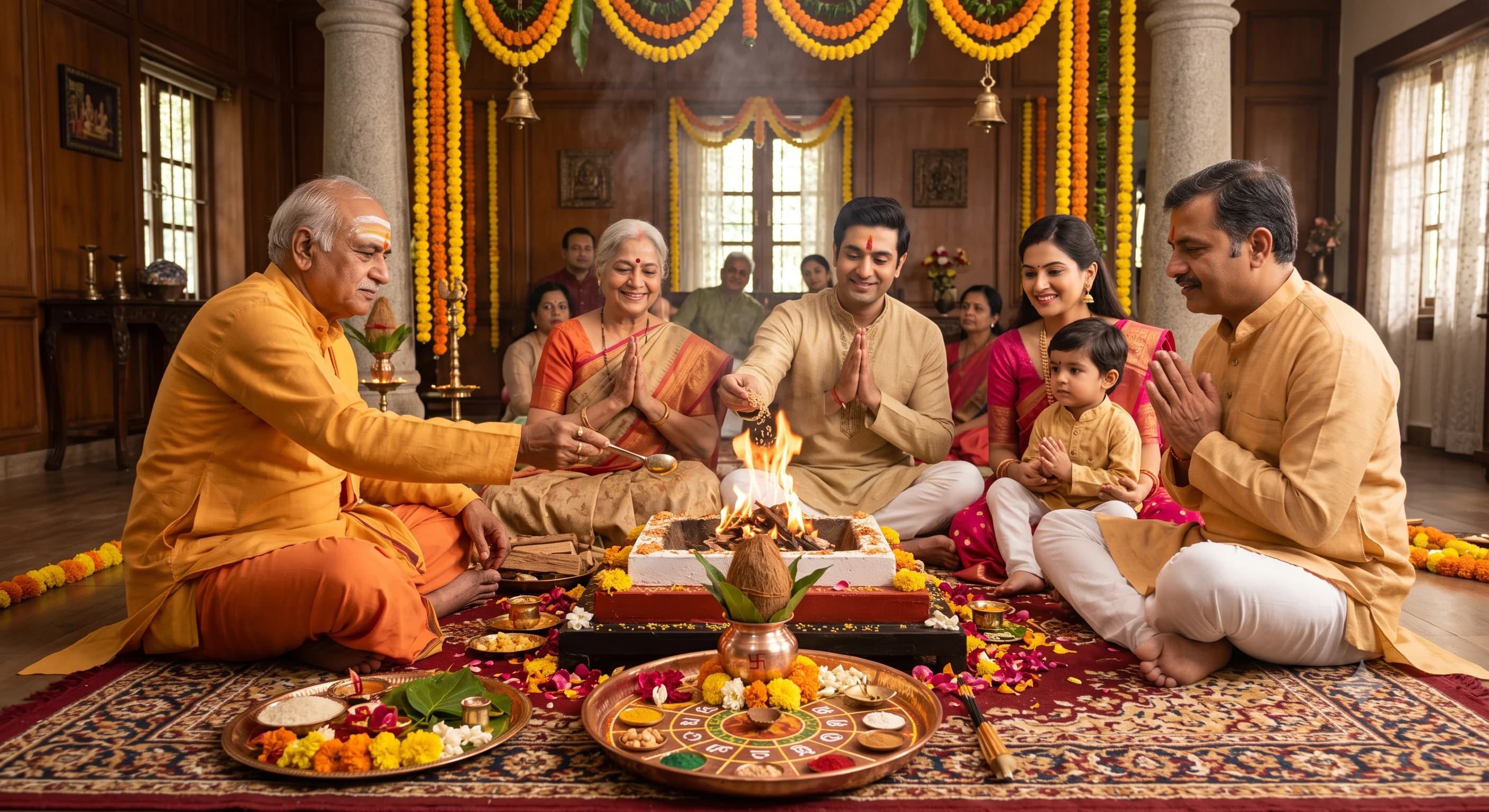
Vastu Shanti is performed before Griha Pravesh in a new building, or after major renovation, to sanctify and re-harmonise the space. Read more about the Vastu Shanti pooja and the Griha Pravesh ceremony. A Vastu puja is a ritual of blessing. It does not replace structural or layout changes, which an expert can advise on.
Frequently asked questions
Is a south-facing entrance always bad?
Many Vastu texts prefer north or east, but a south-facing entrance is not considered a problem in every tradition. Layout and the position of the pooja room also matter, so ask for advice on your specific plan.
What if my kitchen is in the northeast?
Traditional advice is to avoid it, but if it cannot be changed, a Vastu consultant can suggest ways to balance it. Do not make expensive changes without advice.
Can I get my home reviewed?
Yes. You can book a private consultation with a verified āchārya.
Want your home reviewed?
Speak with an Āchārya, or arrange a Vastu Shanti pooja for your space.