Satyanarayan Puja is a worship of Lord Vishnu in his form as Satyanarayana, the embodiment of truth. Families perform it to give thanks, to begin something new, or to fulfil a vow. It is simple enough to do at home, and welcoming enough for the whole family and neighbours to attend.
Key takeaways
- The puja centres on a vrat and the recitation of five chapters of the Satyanarayan Katha.
- It can be done on any auspicious day. Purnima (full moon) is the most popular.
- It takes about two to three hours, and the family traditionally fasts until the katha and aarti are over.
- Sheera (a semolina or wheat-flour halwa) is the traditional prasad.
Significance
The Satyanarayan Katha is found in the Reva Khanda of the Skanda Purana. In it, Lord Vishnu describes this vrat to the sage Narada as an accessible way for ordinary householders to find peace and prosperity. The five chapters tell of people who kept their promises to the Lord and were blessed, and of those who forgot and faced difficulty. The central theme is satya, truth, and honouring a commitment.
Samagri (items needed)
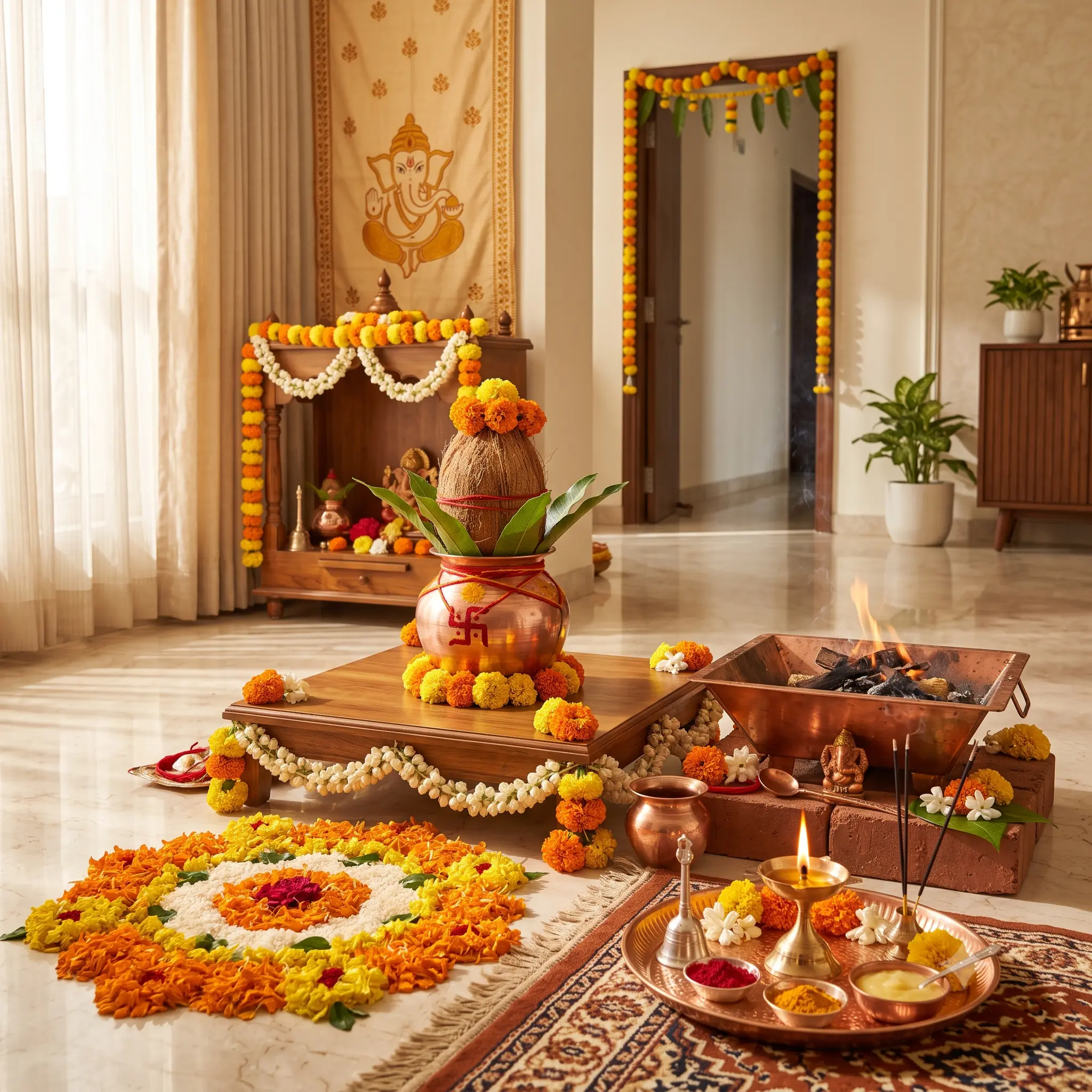
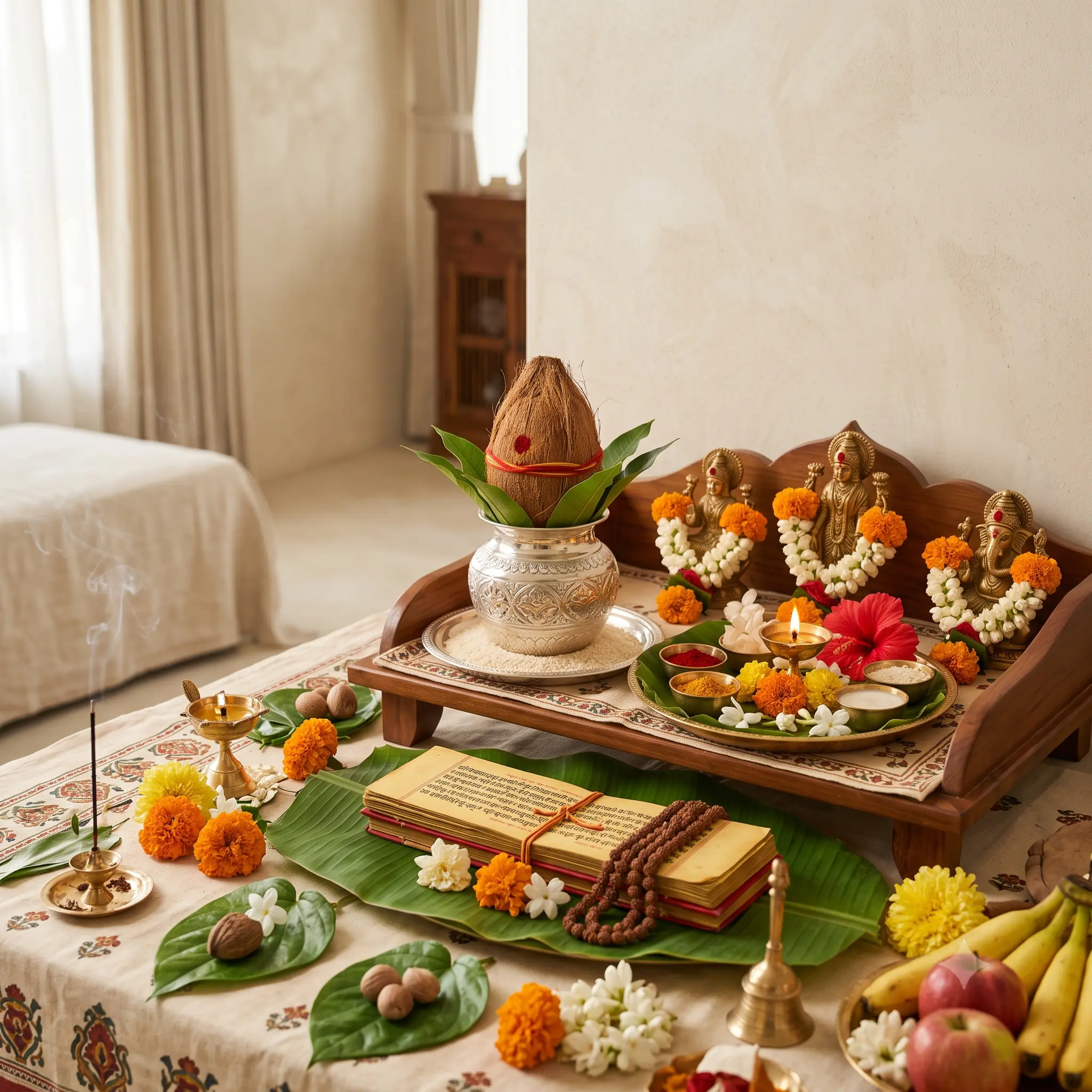
- Brass or copper kalash with mango leaves and a coconut
- Panchamrit: milk, curd, ghee, honey and sugar
- Yellow flowers (marigold is traditional), tulsi leaves, betel leaves and supari
- Panchameva (five dry fruits), bananas and other fruit
- Wheat flour, ghee and sugar for the sheera prasad
- Haldi, kumkum, roli and akshat (rice)
- Incense, camphor, a diya and ghee or oil
- A yellow cloth for the altar and a chowki
An easier way is to order a Satyanarayan samagri kit.
Step-by-step vidhi
- Sankalp: state your name, gotra and the purpose of the puja.
- Ganesh puja: invoke Lord Ganesha first to remove obstacles.
- Kalash sthapana: place the kalash as the symbol of divine presence.
- Worship of Satyanarayan: offer panchamrit, flowers, tulsi and fruit with the traditional upachara.
- Katha: read or listen to all five chapters.
- Aarti: conclude with aarti using camphor and a lamp.
- Prasad: share the sheera, panchamrit and fruit with everyone present.
The traditional prasad
Sheera is made from wheat flour or semolina, ghee and sugar, and is traditionally measured in equal parts, often one and a quarter (sawa) parts of each, with banana and a tulsi leaf. Offer it to the deity first, then share it with all who attended.
Do's and don'ts
- Fast on the day, or eat only once, until the puja is complete.
- Have the family present for the katha, and listen attentively.
- Share the prasad with respect.
- Do not leave the puja midway once begun.
- Do not treat the prasad carelessly. The katha specifically cautions against this.
Best days to perform it
Purnima, Ekadashi and Sankranti are popular, as are occasions such as griha pravesh, a wedding, a new job or a business opening. Thursday, which belongs to Jupiter, is also favoured. Many families perform it every year or on every Purnima.
Frequently asked questions
Do we need a pandit?
Many families read the katha themselves. A pandit adds the correct sankalp and mantras, conducts the puja in full and explains each step to the family. You can arrange a verified pandit for Satyanarayan Katha. We also have a complete guide to the ceremony.
Can women perform the puja?
Yes. The family performs it together, and women take part fully in the worship and the katha.
Can it be done in an apartment, or abroad?
Yes. It needs a clean space and a few hours, not a large setup. Families in the USA, UK, Canada, UAE and Australia perform it regularly.
Need everything for the ceremony?
Book a pandit for Satyanarayan Katha, with or without a complete samagri kit.