
A home pooja does not have to be long or elaborate. For many families, even ten quiet minutes a day with a lamp and a prayer becomes the steadiest part of the day. Here are ten reasons people give for keeping it up. These are personal and traditional benefits, not medical or guaranteed outcomes.
Key takeaways
- A short, regular pooja is more useful than a long one done rarely.
- Most benefits people describe are about calm, routine, family and continuity.
- You can begin with a lamp, a flower and one prayer.
Ten reasons families give
1. A calm start to the day
Lighting a lamp and chanting before the day begins gives many people a few quiet minutes before work and phones take over.
2. Focus through chanting
Repeating a mantra gives the mind one steady thing to hold. Many people find it easier to settle after a few minutes of japa.
3. A daily routine
A fixed time for pooja anchors the day and makes other habits easier to keep.
4. Time together as a family
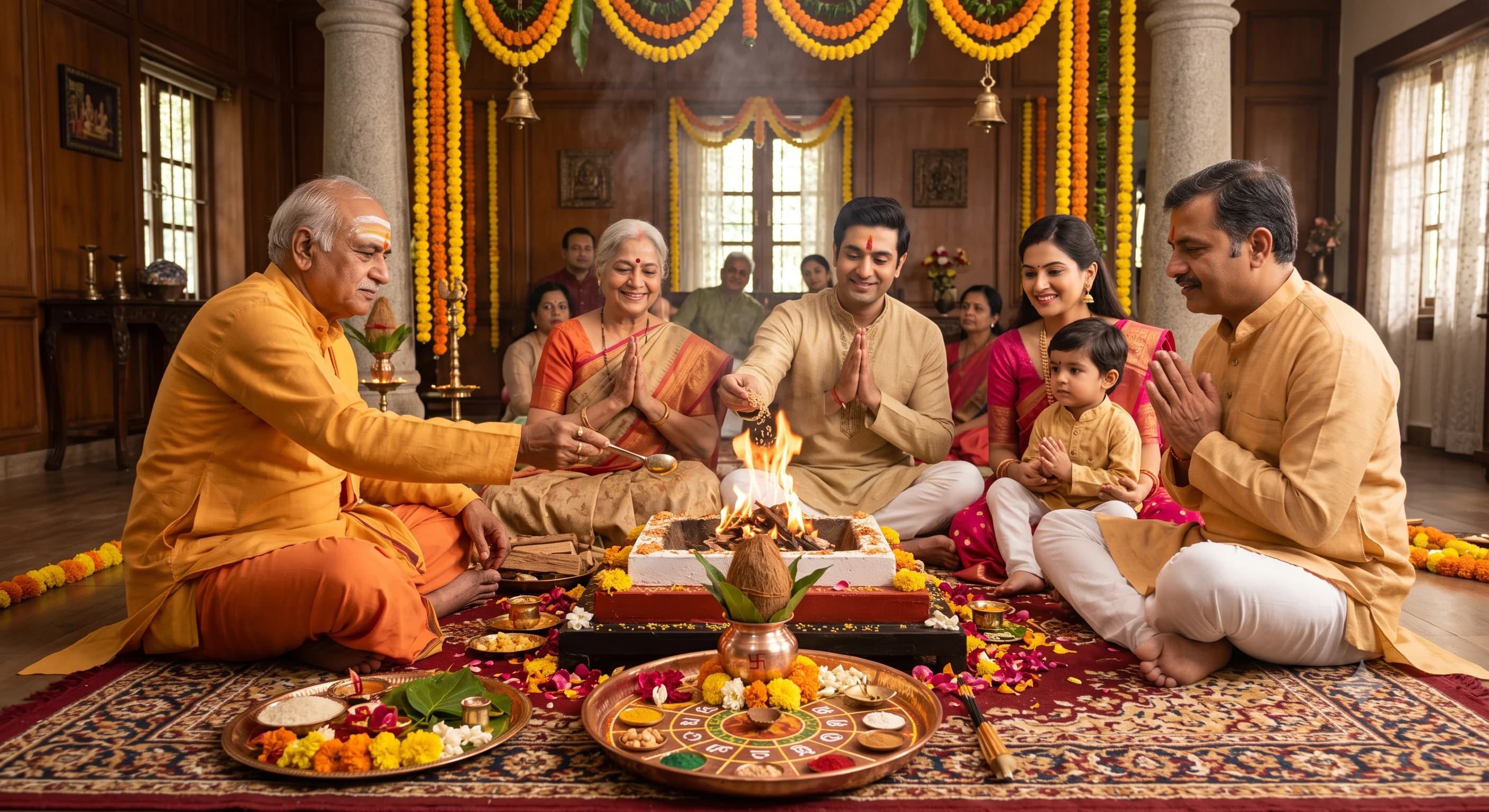
When parents, children and grandparents stand together for the aarti, it becomes a shared moment in the day.
5. A clean, cared-for home
Setting up a pooja space encourages keeping that corner, and often the rest of the home, tidy and welcoming.
6. A sense of gratitude
Offering thanks, rather than only asking, shifts attention to what is already going well.
7. Passing traditions on
Children learn the prayers, festivals and meanings by watching and joining in, which is how traditions stay alive.
8. Marking milestones and festivals
Regular practice makes it natural to mark birthdays, new beginnings and festivals with a fuller pooja, such as a Satyanarayan Katha or Lakshmi-Ganesh pooja.
9. Comfort in hard times
Many people say that prayer and ritual give them something steady to turn to when life is difficult.
10. A feeling of connection
For many, the practice is simply a way of staying connected to their faith, their elders and their community.
How to start in ten minutes
- Choose a clean corner and a regular time, such as after your morning bath.
- Place an image or idol of your ishta devata (the deity you feel closest to).
- Light a lamp or incense and offer a flower.
- Chant a mantra or prayer you know, even for a few minutes.
- Close with a short aarti and a moment of silence.
When to ask for a pandit
For larger occasions, a griha pravesh, a naming ceremony or a festival pooja, a pandit brings the correct vidhi and mantras. You can see the ceremonies we arrange on our poojas page.
Looking for personalised guidance?
Speak with an Āchārya, or plan a ceremony with a pandit.