Griha Pravesh is the ritual entry into a home for the first time. Through prayer, mantra and fire, it consecrates the space and invites Ganesha, Lakshmi and Vastu Purusha into it, turning a house into a home.
Key takeaways
- There are three traditional types of Griha Pravesh: Apurva, Sapurva and Dvandva.
- The muhurat considers the month, the tithi, the weekday and the nakshatra.
- The core vidhi is Ganesh pooja, Navagraha, Vastu pooja, havan and the first entry.
- If you live in an apartment or abroad, a lamp-based version can replace the open havan.
Why Griha Pravesh matters
In Hindu tradition a home is more than a building. It is where the family's daily life, prayers and samskaras take place. Griha Pravesh sets the home's spiritual foundation before the family begins to live there, by purifying the space and asking for the blessings of the deities who protect it.
The three types
- Apurva: the first entry into a newly built or newly bought home.
- Sapurva: re-entering a home after a long absence or after major renovation.
- Dvandva: re-entering a home after it was damaged or the family had to leave it, for example because of a disaster. Your pandit will advise on the vidhi.
Step-by-step vidhi
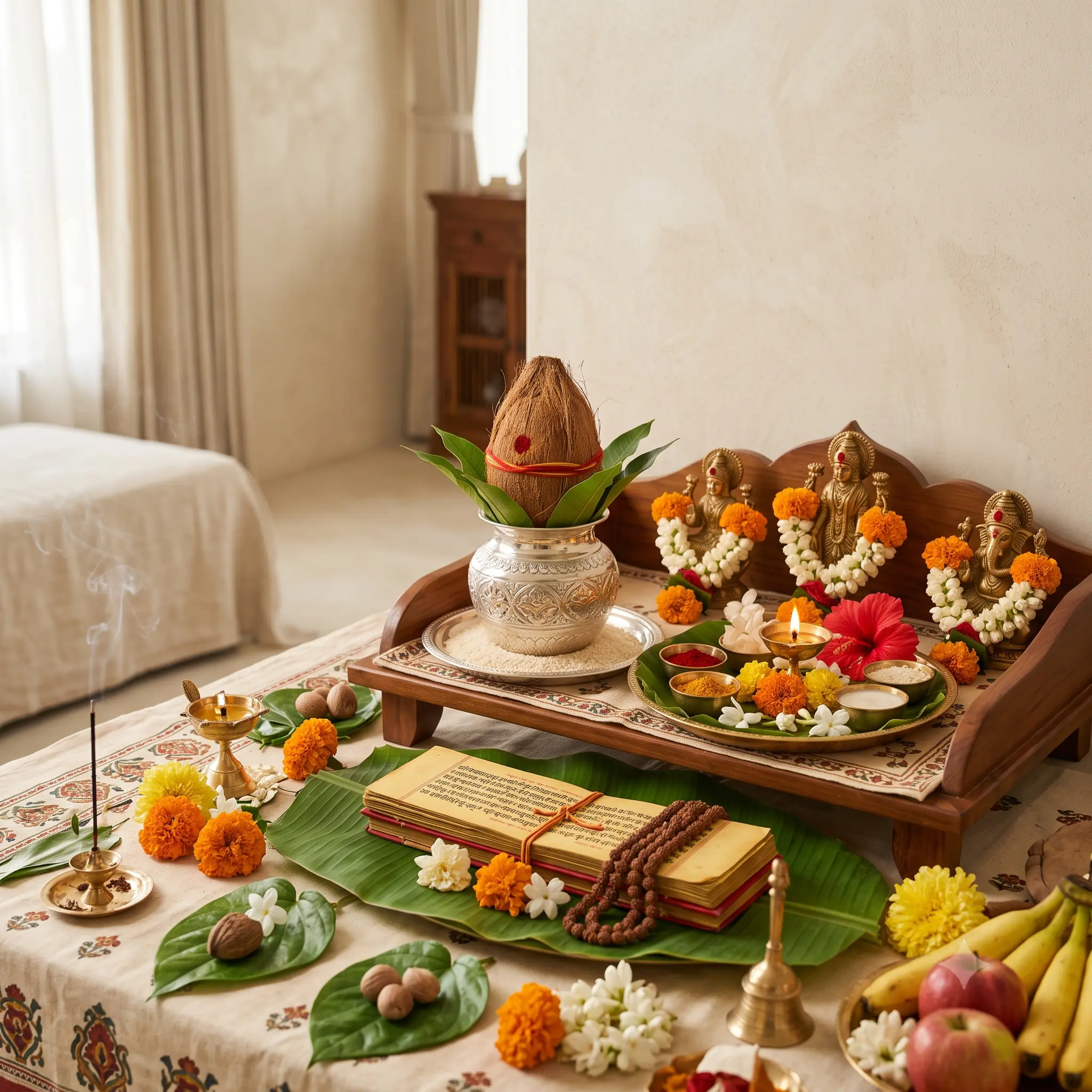
- Ganesh puja: the ceremony always begins with the invocation of Ganesha.
- Punyahavachana: purification of the space and the participants with sanctified water.
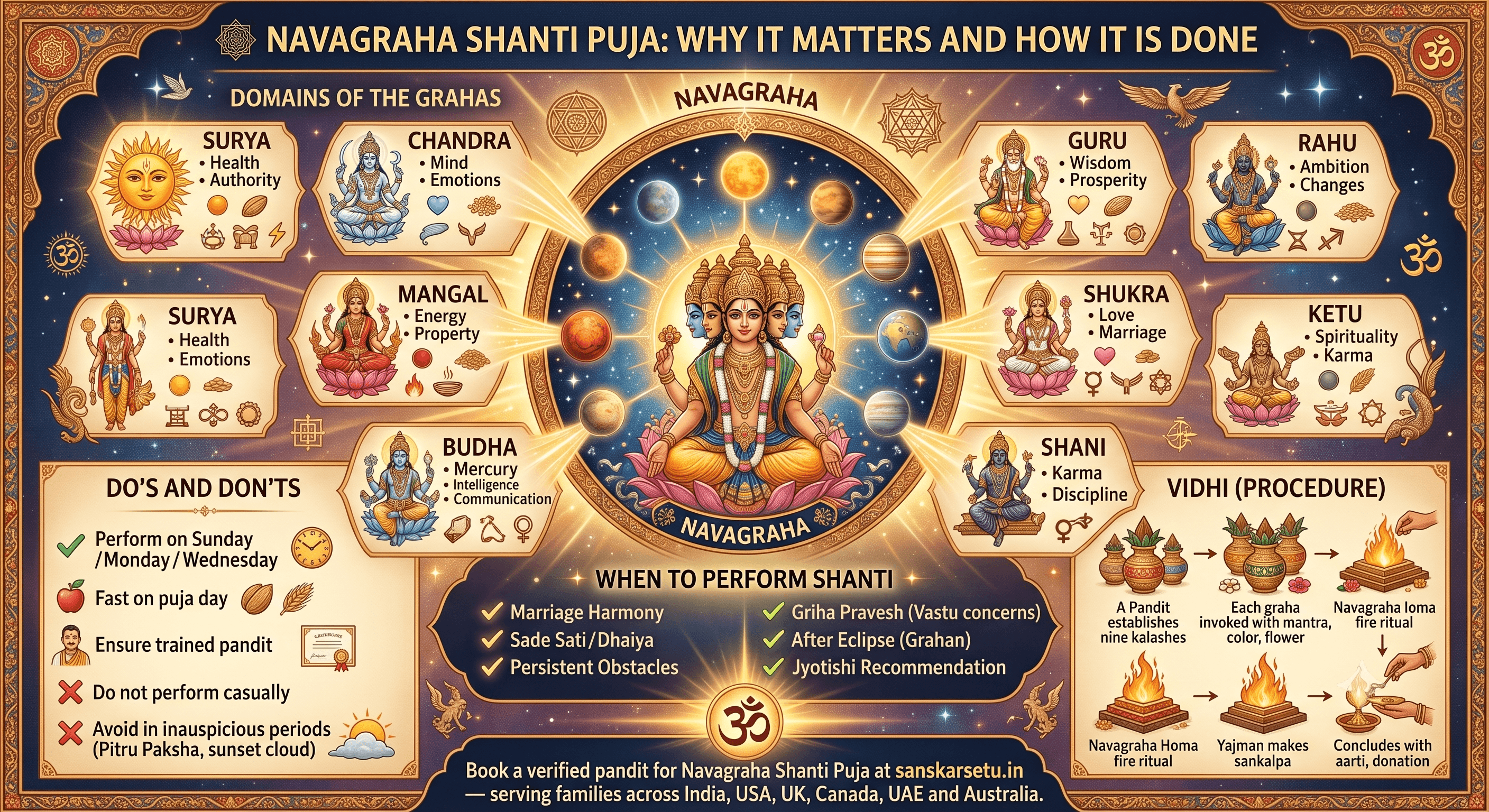
- Navagraha puja: worship of the nine planetary deities for harmony.
- Vastu puja: worship of Vastu Purusha, the presiding spirit of the site.
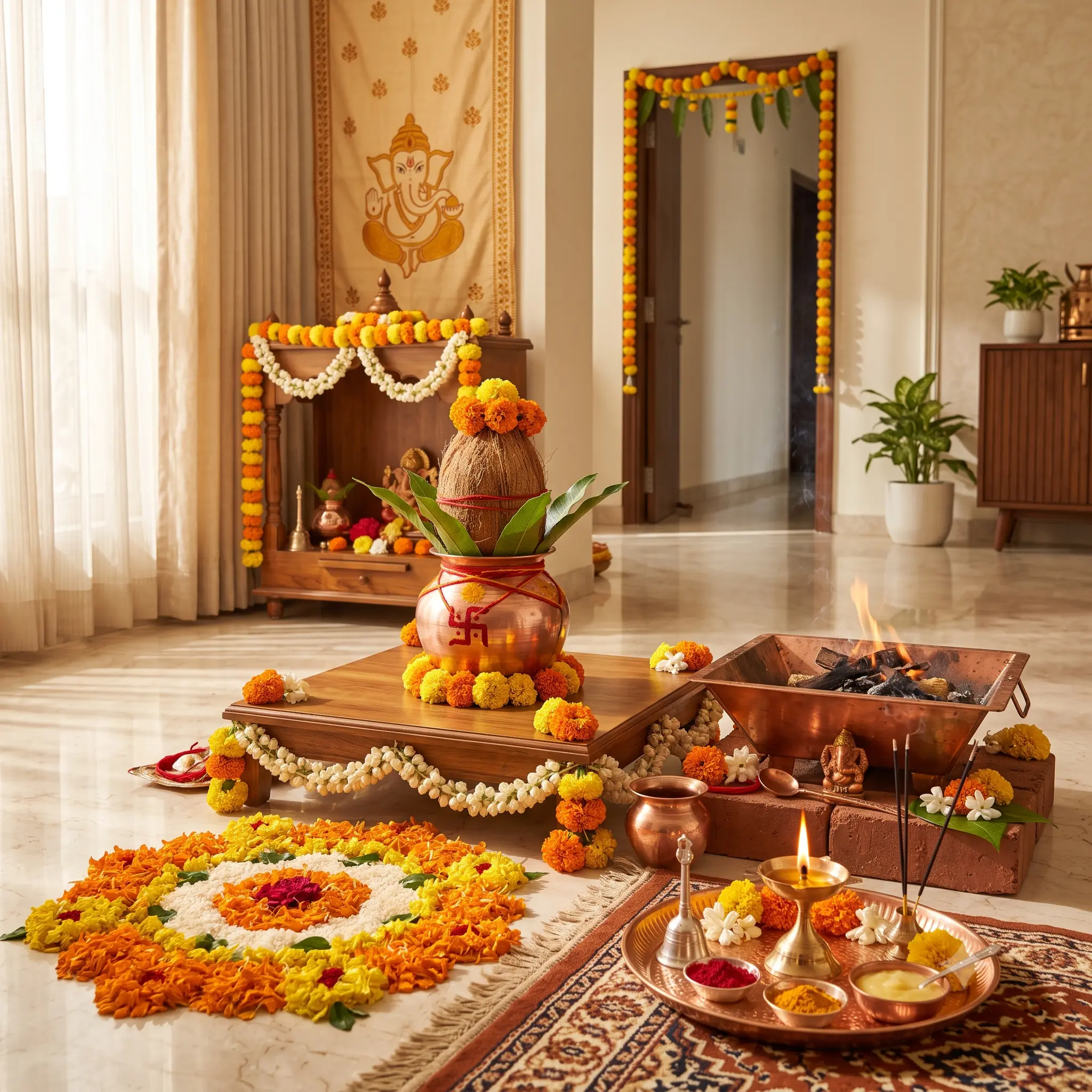
- Havan: a sacred fire with mantras, as the household's first fire.
- Dwar puja and entry: worship of the threshold, then the family enters with the right foot first, led by the lady of the house carrying a kalash.
- Boiling milk: milk is boiled in the kitchen until it overflows, a sign of abundance.
- Prasad and a meal: many families conclude with a Satyanarayan Katha and a meal for guests.
How the muhurat is chosen
A pandit or jyotishi considers several factors for your location:
- Month: Magha, Phalguna, Vaishakha and Jyeshtha are widely favoured. Chaturmas, Adhik Maas and Pitru Paksha are generally avoided, and some traditions also avoid Pausha.
- Tithi: days in the bright half of the month are generally preferred.
- Weekday: Monday, Wednesday, Thursday and Friday are commonly preferred.
- Nakshatra: nakshatras such as Rohini, Mrigashira, Uttara Phalguni, Uttara Ashadha, Uttara Bhadrapada and Revati are commonly cited as favourable.
- Time of day: inauspicious periods such as Rahu Kaal are avoided.
Customs vary across regions and families, so confirm the date with your pandit rather than relying on a general list.
Do's and don'ts
- Enter with the right foot first while carrying a kalash.
- Keep the home clean, with a toran of mango leaves at the door.
- Keep the essentials for the first day in the kitchen.
- Do not skip the ceremony if a muhurat has been fixed. If the date must change, ask your pandit for a new one.
- Do not hold the ceremony during a period of mourning. Traditions differ on how long to wait, so ask your pandit.
Apartments and homes abroad
If a havan is not permitted, ask your pandit about a version with a ghee lamp, or a small havan on a balcony or in an open area. Smoke alarms are a common issue in apartments abroad, so plan for this in advance.
Frequently asked questions
How long does it take?
Usually two to four hours, depending on whether the Satyanarayan Katha is included.
What do we need to arrange?
See our Griha Pravesh preparation guide for a checklist, or order a Griha Pravesh samagri kit.
Can you arrange the pandit?
Yes. Book a verified pandit for Griha Pravesh, in India or abroad.
Planning your Griha Pravesh?
We set the muhurat, match a pandit and can bring the full samagri.