A kundali, also called a janam patri or birth chart, is a map of the sky at the exact moment and place of your birth. In Vedic astrology (Jyotisha), it is read to understand temperament, strengths and the timing of different phases of life. It is a tool for reflection and planning, and it works best when read with sense and without fear.
Key takeaways
- A kundali needs your date, exact time and place of birth. A few minutes can change the ascendant.
- Three things are different: lagna (rising sign), rashi (Moon sign) and nakshatra (Moon's star).
- The chart has twelve houses, each linked to an area of life, and nine grahas placed in them.
- Astrology offers guidance and tradition, not certainty. Use it alongside effort and practical decisions.
What a kundali shows
The chart is drawn from where the Sun, Moon, Mars, Mercury, Jupiter, Venus, Saturn and the two lunar nodes (Rahu and Ketu) stood in the zodiac when you were born. Vedic astrology uses the sidereal zodiac, which is why your Vedic Sun sign is often one sign earlier than your Western Sun sign.
Lagna, Rashi and Nakshatra
Lagna (ascendant)
The zodiac sign rising on the eastern horizon at the moment of birth. It changes roughly every two hours, so it needs an accurate birth time. Lagna is considered the foundation of the chart, because the houses are counted from it.
Rashi (Moon sign)
The sign in which the Moon was placed. The Moon spends about two and a quarter days in each sign. In India, the rashi is commonly used for the name sound, for daily and yearly predictions and for transits such as Sade Sati.
Nakshatra
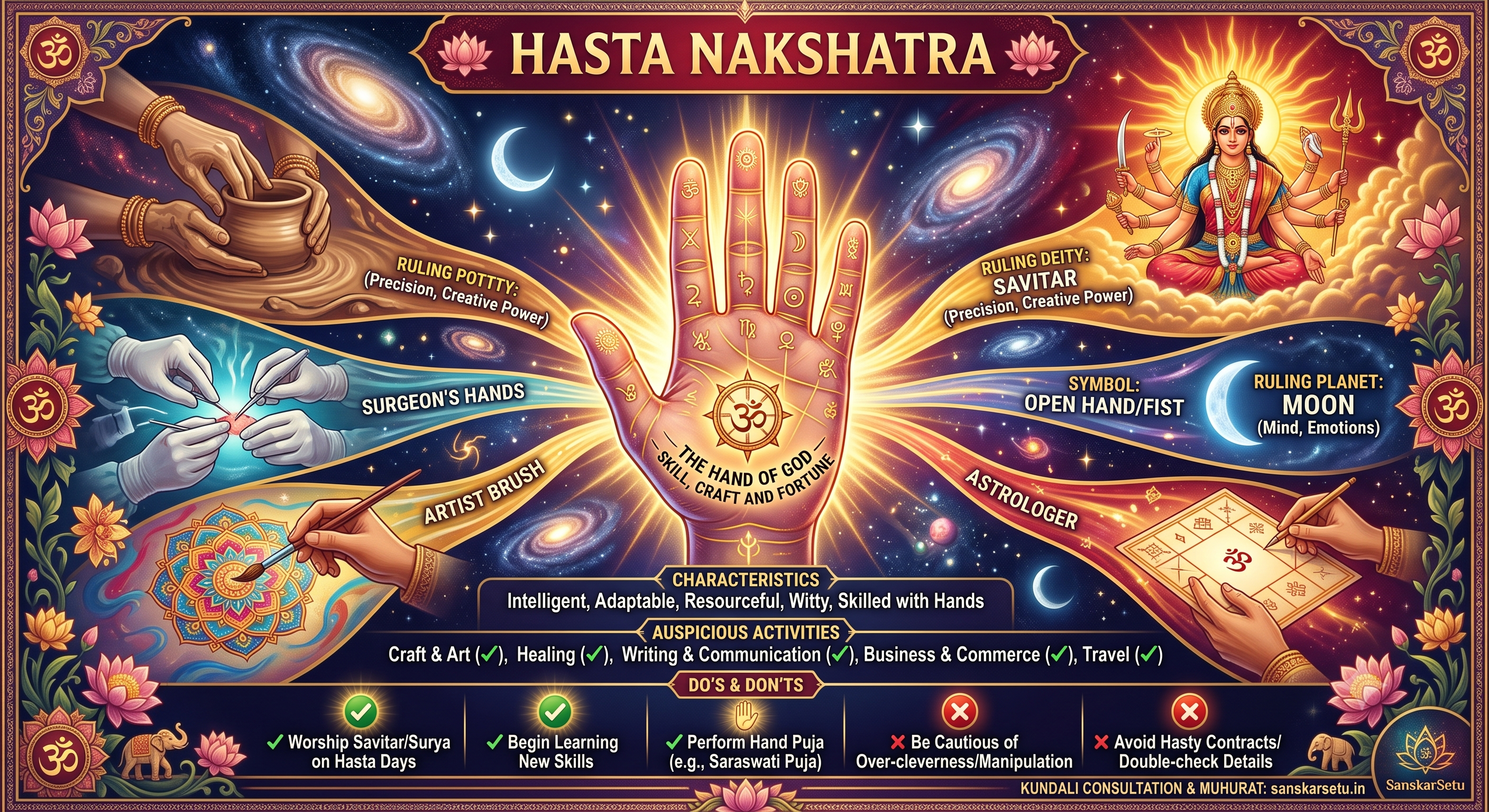
The Moon's position among the 27 lunar mansions, further split into four padas (quarters). Your birth nakshatra determines the starting point of the Vimshottari dasha system, and its pada gives the first syllable often used for a baby's name.
The twelve houses (bhavas)
- First: self, body, personality
- Second: wealth, family, speech
- Third: siblings, courage, effort
- Fourth: home, mother, comfort, property
- Fifth: children, education, creativity
- Sixth: health, daily work, debts
- Seventh: marriage, partnerships
- Eighth: change, longevity, hidden matters
- Ninth: dharma, fortune, teachers, father
- Tenth: career, status, public life
- Eleventh: gains, friends, aspirations
- Twelfth: expenses, retreat, foreign lands, liberation
Each house is also ruled by the planet that rules the sign in it, and planets influence houses through their placement and aspects. This is why one planet can mean different things in different charts.
Dasha, the timing system
The most used timing system is the Vimshottari dasha, a cycle of 120 years divided among nine planets. Which dasha you are in at birth depends on your Moon's nakshatra. Astrologers read the running dasha and sub-period together with transits to discuss the themes of a given phase.
Chart styles
- North Indian: a diamond-shaped chart in which the houses are fixed and the signs rotate.
- South Indian: a square chart in which signs are fixed and the lagna is marked.
- East Indian: similar to the North Indian, with its own arrangement, used in Bengal and Odisha.
The charts contain the same information in different layouts. The Navamsa (D-9) is a secondary chart often read for marriage and the deeper strength of planets.
Why the birth time matters
If the birth time is off by several minutes, the lagna can change, and with it the houses and some results. Use a hospital record or birth certificate where possible. If the time is uncertain, a pandit can sometimes help to refine it, but results should be taken as indicative.
Where kundali is used in practice
- Choosing a name sound at Naamkaran
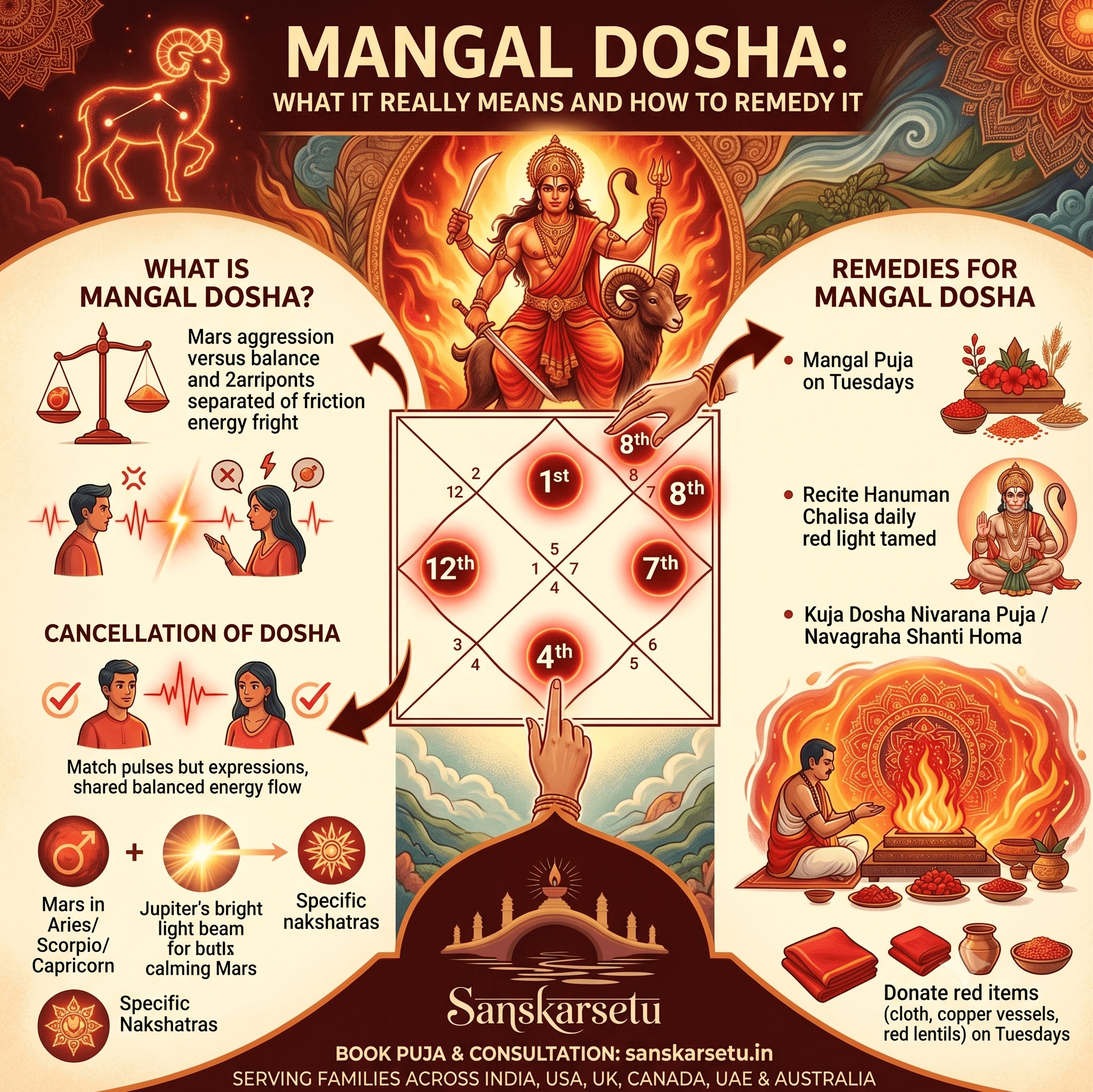
- Marriage matching (Guna Milan) and checking for Mangal Dosha
- Choosing a muhurat for ceremonies and major steps
- Understanding transits like Sade Sati, and when to begin a new venture
A balanced way to use it
Read your kundali for self-understanding, not to be scared. Be careful with anyone who creates fear in order to sell an expensive remedy. A sound astrologer explains the chart, suggests simple practices such as prayer, charity or discipline, and leaves the decisions with you. If you would like a private reading, you can speak with an Āchārya.
Frequently asked questions
Can I make a kundali without the exact time?
You can make a rough chart from the date and place, but the lagna and houses may be unreliable. Rashi and nakshatra can still be useful if the Moon did not change sign that day.
Is my Rashi the same as my Sun sign?
No. Rashi is the Moon sign. Your Sun sign is where the Sun stood. They are often different.
Does a kundali decide my fate?
Tradition treats it as an indication of tendencies and timing, not a fixed script. Effort, circumstances and choices matter.
Looking for personalised guidance?
Speak with an Āchārya, or plan a ceremony with a pandit.