
Naamkaran, or Namakarana, is the Hindu naming ceremony. It is the fifth of the sixteen samskaras, the sacred rites of passage described in the Grihya Sutras, and it is when a child is formally given a name in front of family, with prayers for a long, healthy and good life. A name is something a person carries for life, so families usually take time over it.
Key takeaways
- Namakarana is traditionally held on the 11th or 12th day after birth, once the period of ritual impurity (sutak) is over.
- Many families now hold it later, often within the first month or two, to suit the family and the baby.
- The nakshatra and pada of birth suggest a starting syllable for the name.
- Along with the everyday name, some families keep a private nakshatra name. Both are fine.
The meaning of the ceremony
In the Vedic view, a name is not just a label. It is a sound that will be spoken with love thousands of times, so it is chosen with care and spoken for the first time with blessings. The father traditionally whispers the name in the baby's right ear, and the family and elders welcome the child by that name.
When is it held
Classical texts mention several days: the 10th, 11th or 12th day, and sometimes the 101st day or the end of the first year. In practice:
- Many families follow the 11th or 12th day, after the sutak period ends and the house has been cleaned.
- Others hold the ceremony on the 21st day, at one month, or with the first festival after birth.
- NRIs and busy families often choose a weekend near a suitable date.
Customs differ by region and community, so ask a family elder and confirm a muhurat with your pandit. For the rest of the details see our Naamkaran ceremony guide and how to read a panchang.
Choosing a name by nakshatra
Each of the 27 nakshatras is divided into four padas, and each pada has a traditional starting syllable. Families look up the baby's birth nakshatra and pada to find the letters it suggests. A few examples:
- Ashwini: Chu, Che, Cho, La
- Bharani: Li, Lu, Le, Lo
- Rohini: O, Va, Vi, Vu
The syllable depends on the pada, so you need an accurate birth time. A kundali or a quick consultation will tell you the nakshatra and pada. The syllable is a tradition-based starting point, not a rule: many families pick a name they love and then adjust.
Tips for choosing a name
- Pick a name with a clear, positive meaning. Names of deities, virtues, rivers and nakshatras are popular.
- Check how it sounds in the languages and countries the child will grow up in, and how it shortens.
- Avoid names that are hard to pronounce or easily teased.
- Agree as a family before the day, so the ceremony is calm.
What happens on the day
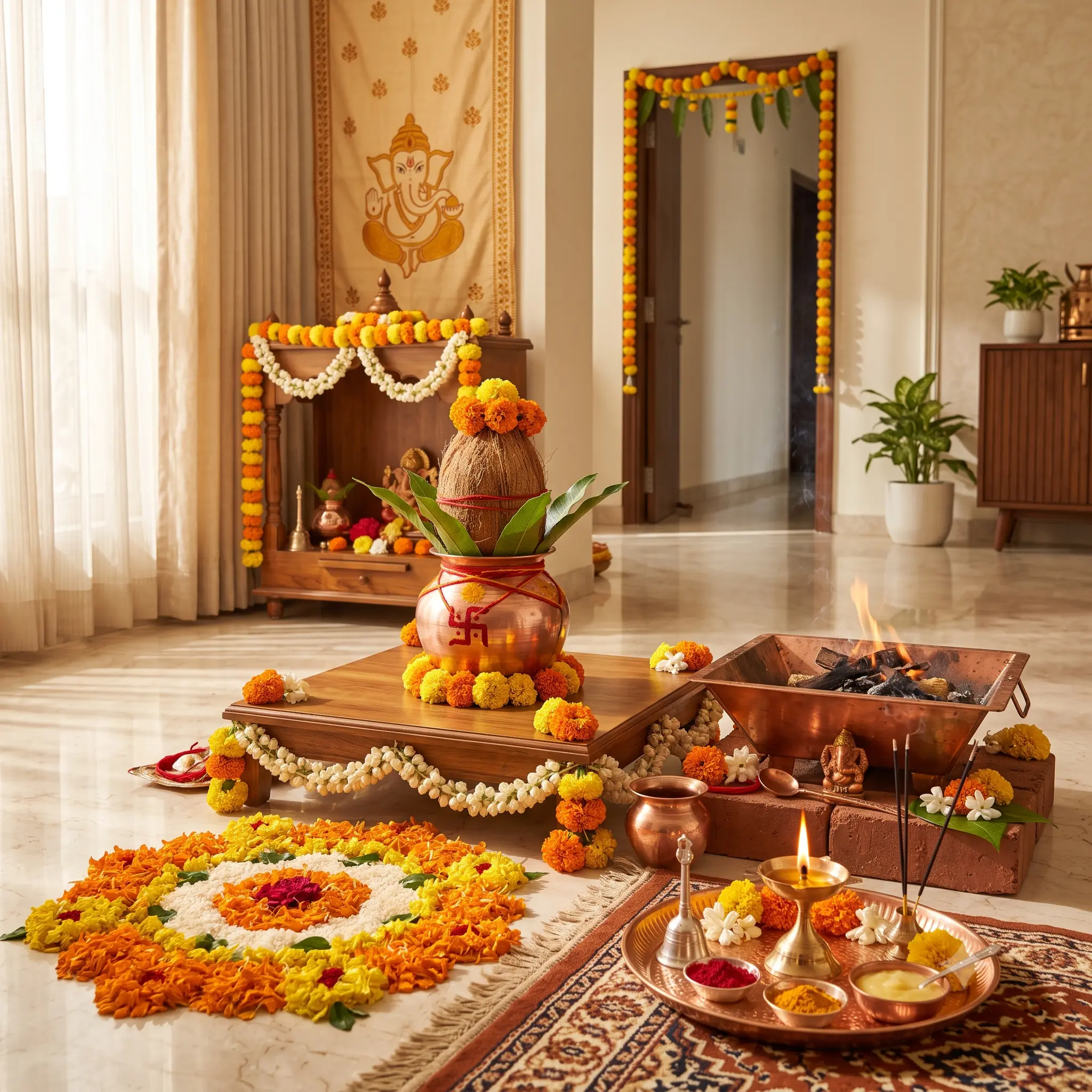
- Preparation: the house and pooja area are cleaned and decorated. The mother and baby are dressed in new or clean clothes.
- Ganesh pooja and kalash sthapana: the pandit begins with Ganesha and installs a kalash.
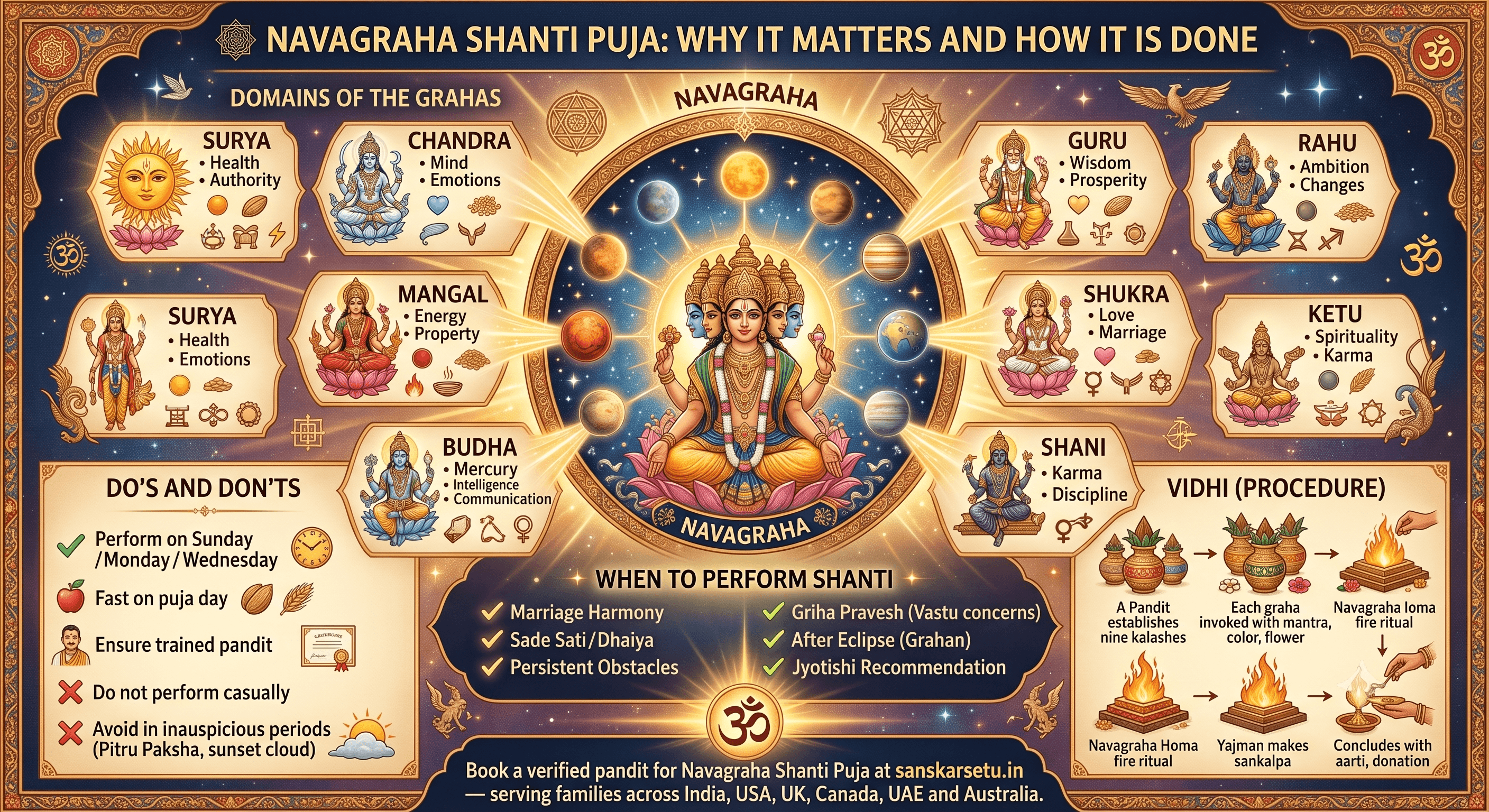
- Navagraha and kuladevata worship: the pandit invokes the planets and the family deity.
- Havan: sometimes a short havan with ghee and samidha.
- The naming: the pandit announces the nakshatra and the suggested syllable. The father or an elder whispers the name into the baby's right ear, and then it is announced to the family.
- Blessings: elders bless the baby, gifts are exchanged and prasad is shared.
Samagri
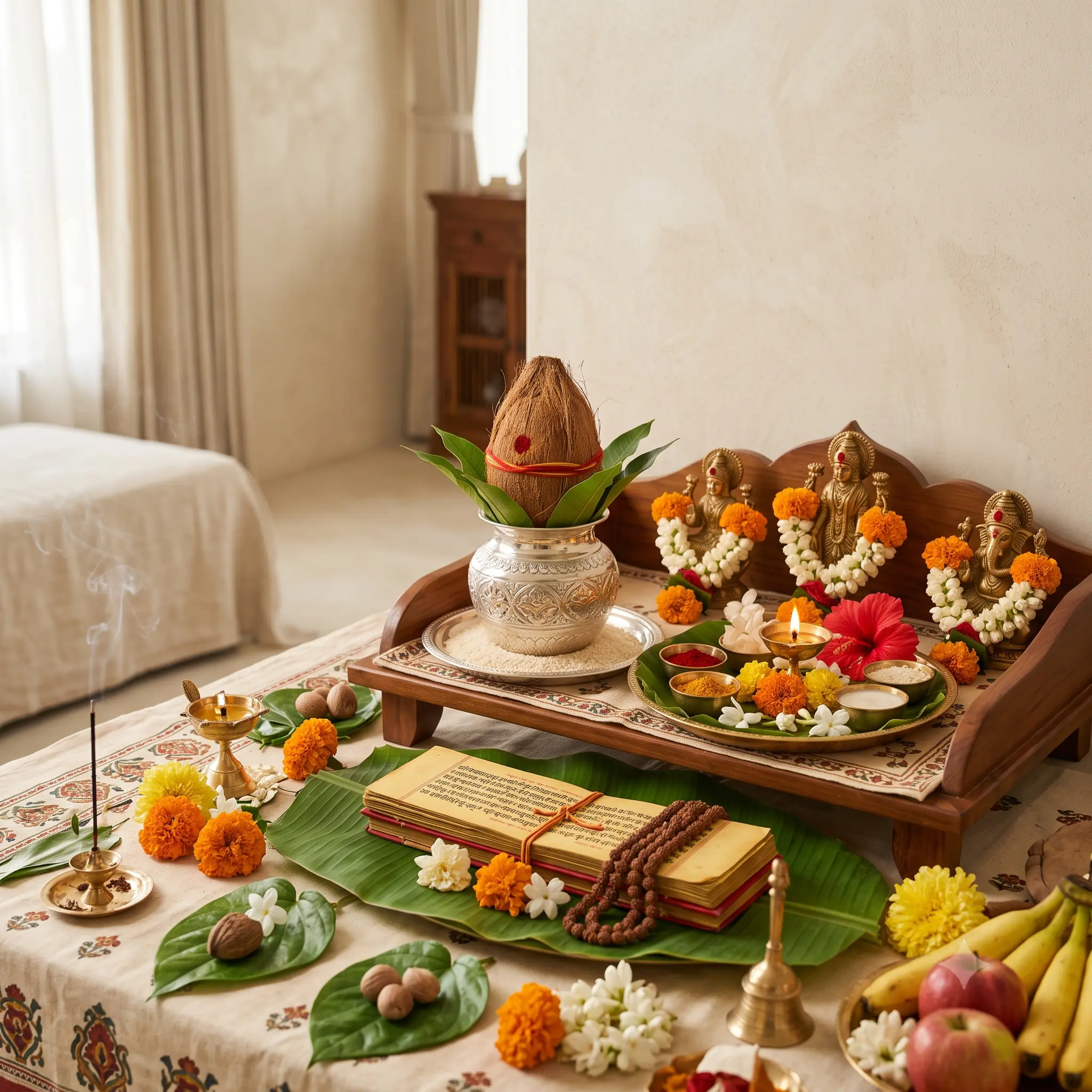
- Kalash with mango leaves and coconut
- Roli, akshat, turmeric, kumkum, flowers
- Incense, camphor, a ghee lamp
- Honey, ghee and a small plate for writing the name (some families write it in rice)
- Sweets and fruit for prasad
See our Mundan and Naamkaran page or the samagri kit for a ready set.
Frequently asked questions
Can the ceremony be done at home?
Yes. It is commonly a small home ceremony, and many families hold it in a temple or hall with relatives.
What if the baby already has a name?
Families often use a hospital or informal name first. The formal ceremony can still be done and the name announced, or changed if the family wishes.
Can we hold it later than usual?
Yes. If the 11th or 12th day is not practical, hold it when the family can gather. Confirm an auspicious time with your pandit.
Looking for personalised guidance?
Speak with an Āchārya, or plan a ceremony with a pandit.