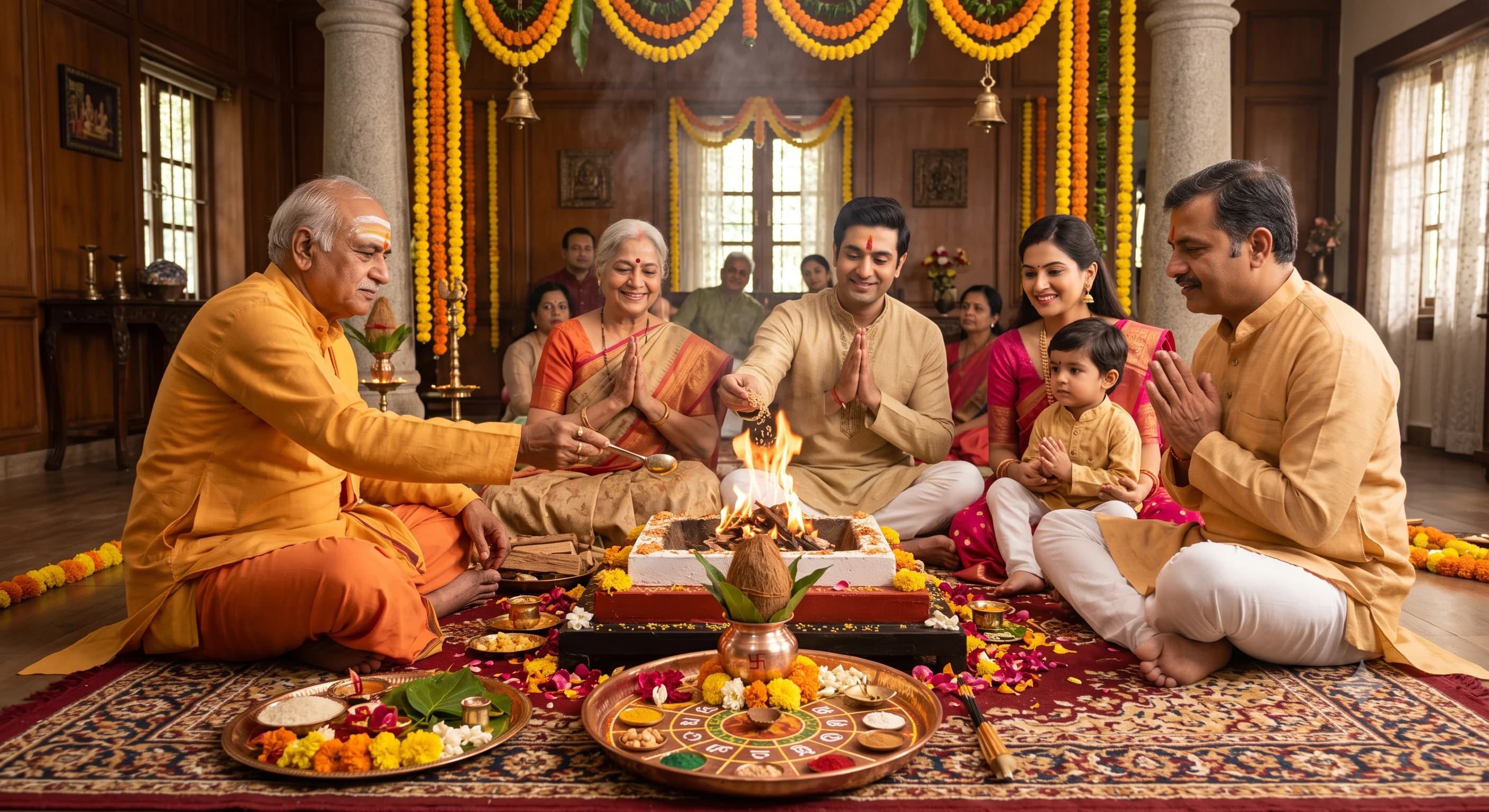

Many families abroad now take part in poojas by video, either because there is no pandit of their tradition nearby, or because the ceremony is in India and they cannot travel. Done well, it can be a meaningful experience. This guide explains how it works, in plain terms and without exaggeration.
Key takeaways
- In an online puja, a pandit conducts the ritual and the family joins by video, often doing simple steps at home.
- It suits festival poojas, Satyanarayan Katha, Rudrabhishek, Shradh and ceremonies in India that you attend remotely.
- Some ceremonies, such as a wedding or Upanayanam, depend on physical rites and presence, so ask your pandit what is possible.
- Agree the time in both time zones, and get the samagri list in advance.
The two common formats
- The pandit performs in India, and you watch and take part by video. The pandit conducts the ritual with your name, gotra and sankalp. You join the call, offer flowers or water at home as guided, and receive the blessings. Used for poojas, vrats and Shradh.
- The pandit guides you by video while you perform the ritual at home. The pandit tells you each step, chants the mantras and you do the offerings. Used for Griha Pravesh, Naamkaran and festival poojas where you wish to perform them yourself.
How a session usually runs
- Booking: you choose the pooja, share your names, gotra and any wishes, and confirm a date and time.
- Muhurat: the pandit chooses a time suitable for your location and for the ritual. See muhurat for NRIs.
- Preparation: you receive a samagri list. You prepare a clean space, a lamp, flowers, water and prasad.
- The ceremony: you join the call, the pandit begins with Ganesh pooja and sankalp and continues with the main ritual, with your participation at points.
- Closing: aarti, blessings and prasad. Many families receive the prasad later or prepare their own at home.
What you do at home
- Bathe, wear clean clothes and sit in a quiet space.
- Place a lamp, a kalash or a bowl of water, flowers and a plate for offerings in front of you.
- Keep your phone or laptop steady, with good lighting and sound.
- Follow the pandit's instructions at each step. Keep your family close, and children quiet and respectful.
What online puja can and cannot do
Works well for: Satyanarayan Katha, Rudrabhishek, Ganesh and Lakshmi poojas, Navagraha shanti, Shradh and vrat poojas, and ceremonies in India that you watch.
Needs care: Griha Pravesh, Naamkaran and Mundan involve physical steps at home, so a pandit guides you, or you arrange a local pandit.
Often better in person: Vivah, Upanayanam and rites that need the pandit's direct presence. Ask your pandit and your family elders.
Views differ on how a ritual performed at a distance is regarded. Many families find it meaningful, and some prefer in-person rites. Choose what fits your family's belief.
Questions to ask before you book
- Will the pandit conduct the pooja live, and not play a recording?
- Will my name, gotra and sankalp be used?
- Which items must I prepare at home?
- What is the time in my time zone?
- What is the total cost, and what is the cancellation policy?
- Is a recording allowed or provided?
Our checklist on how to choose a pandit abroad goes into more detail. You can also look at support for NRI families.
Frequently asked questions
Is an online puja valid?
Views vary by tradition. Many families find it a sincere and meaningful way to take part when they cannot attend in person. Ask your elders and pandit.
Can my parents in India take part too?
Yes. Family in different countries can join the same call, which is one of its advantages.
What if the call drops?
Ask the pandit about a backup plan, such as a phone number and a reconnect step. Keep the internet connection stable and test it first.
Looking for personalised guidance?
Speak with an Āchārya, or plan a ceremony with a pandit.