The Satyanarayan Katha is among the most loved family poojas, performed for a new home, a new job, a child's birth, or simply in gratitude. It is also one of the easiest to hold abroad: it needs a small space, a few items and an hour or two. Here is how families outside India usually do it.
Key takeaways
- It is done on any auspicious day. Purnima, Ekadashi and Thursdays are popular. Many NRI families pick a weekend near a Purnima.
- The ceremony has two parts: the pooja and the reading of the five-chapter Katha, followed by aarti and prasad.
- The classic prasad is made of semolina, ghee, sugar, banana and milk, and is easy to prepare abroad.
- You can read the Katha yourself, ask a local pandit, or have a pandit guide you by video.
Choosing the day
Purnima (full moon) is the most common day, with Ekadashi, Thursdays and special occasions also popular. Since most of us work on weekdays, many families choose the nearest weekend and then set the time by a panchang for their city. For help, see our guide to muhurat for NRIs. For the complete procedure, read the Satyanarayan puja step by step and our ceremony guide.
What you need
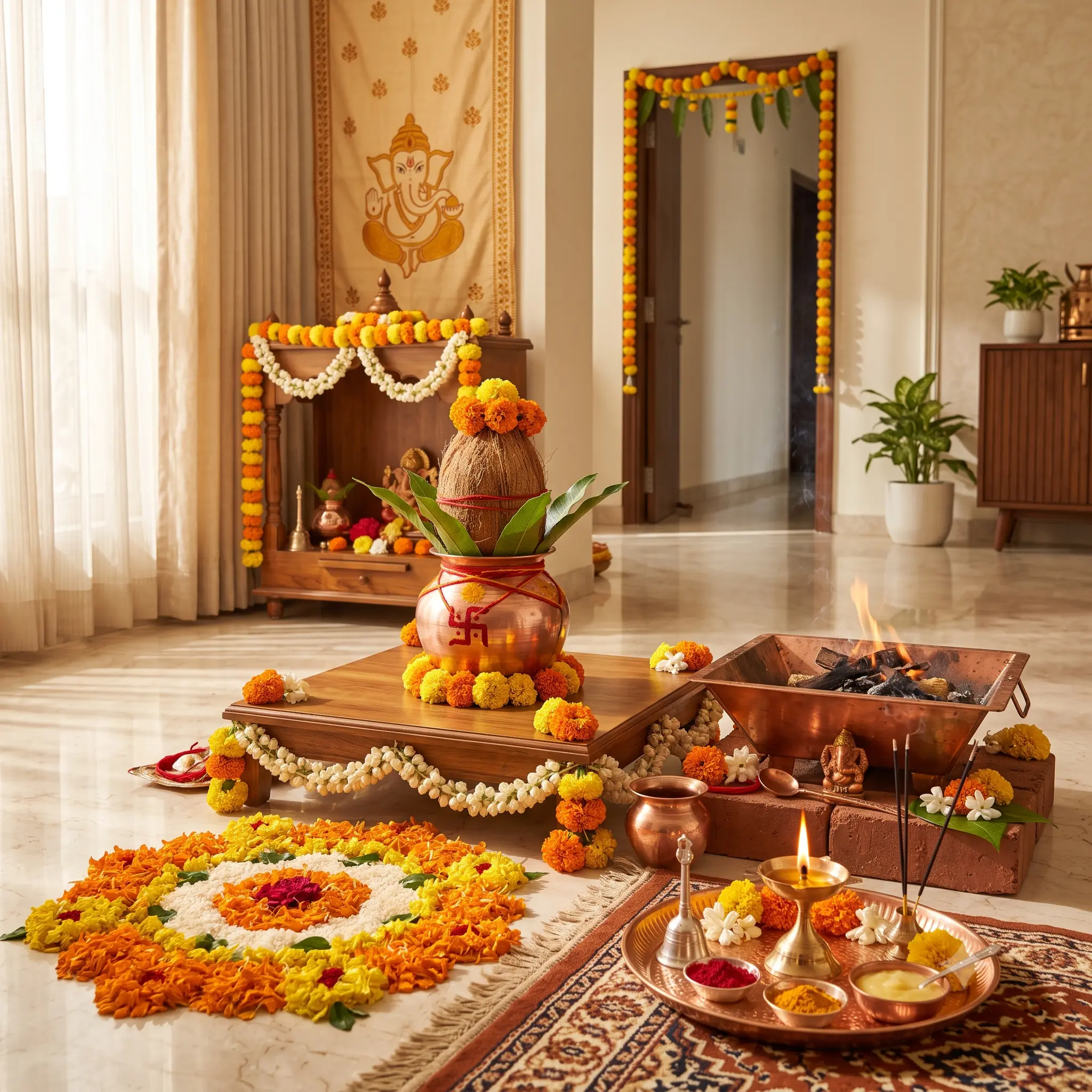
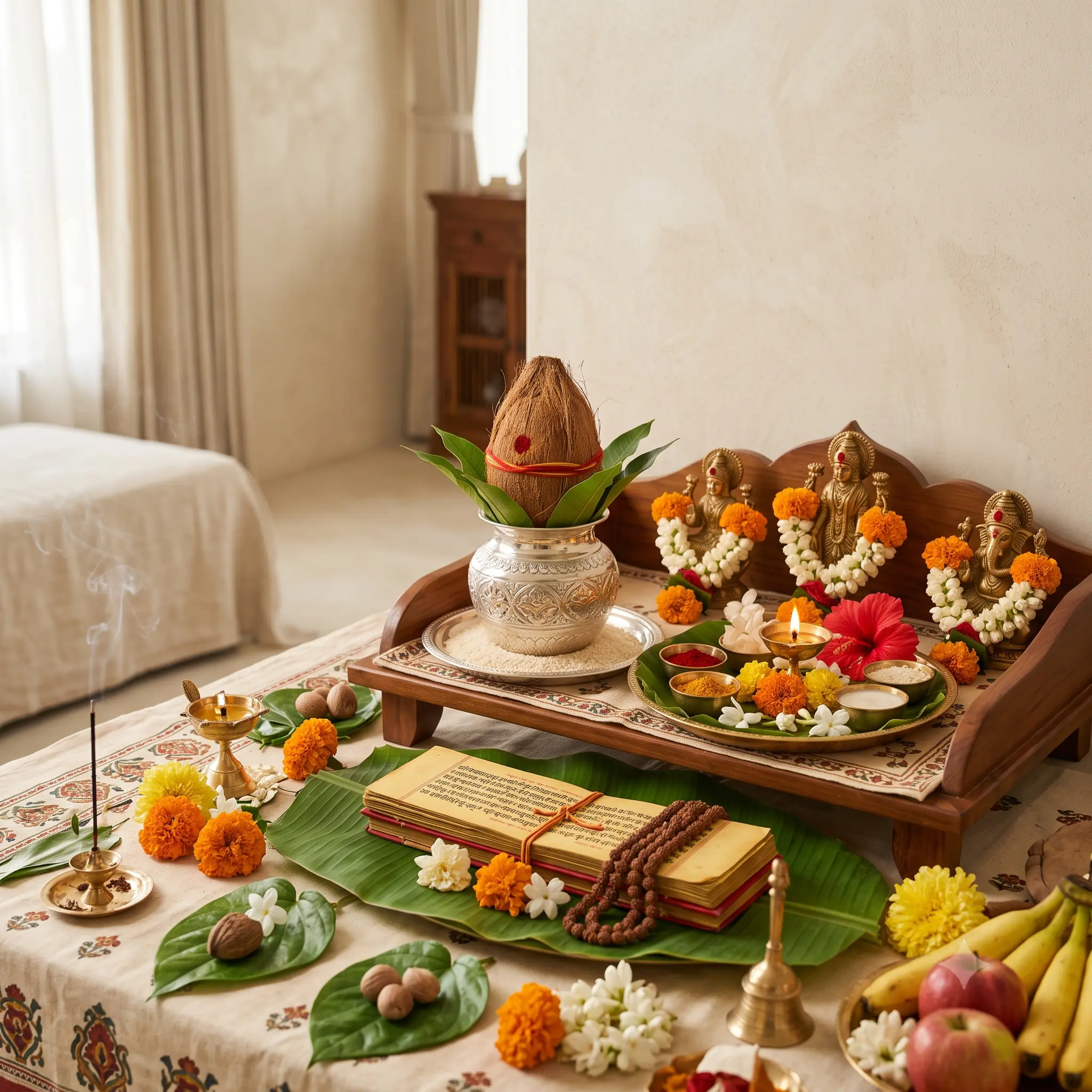
- An image of Lord Satyanarayan (Vishnu), a small Ganesha, a chowki or low table with a clean yellow cloth
- A kalash with water, a coconut and leaves (see substitutes in our samagri guide)
- Roli, akshat, turmeric, sandalwood, flowers, tulsi leaves if available
- Incense, a ghee lamp, camphor and a bell
- Fruits, betel leaves and supari
- Ingredients for the prasad: semolina (sooji), ghee, sugar, milk, banana
- The Katha book in your language
You can use the Satyanarayan samagri kit as a ready checklist.
The prasad
The prasad of the Katha is a sweet halwa made of semolina, ghee, sugar, milk and banana, usually measured in sawa (one and a quarter) parts by tradition. Make it fresh, offer it during the pooja, and share it with everyone present. Avoid tasting it before it is offered.
How the ceremony runs
- Clean the space and set up the chowki, the image and the kalash.
- Take the sankalp with your names and gotra.
- Worship Ganesha, the kalash and the Navagraha briefly.
- Worship Lord Satyanarayan with water, panchamrit, flowers and tulsi, offering the prasad.
- Read the five chapters of the Katha. Listen with attention, and invite family and friends.
- Offer aarti and share prasad.
Doing it yourself, with a local pandit or by video
- Yourself: many families do it using a printed vidhi. Keep it simple and sincere.
- A local pandit: a temple priest or community pandit can conduct it at your home. Confirm language and tradition.
- By video: a pandit in India or elsewhere can guide the vidhi and the Katha online. See our guide to online puja.
You can arrange support through our Satyanarayan pooja page or NRI family support.
Hosting friends and community
- Tell guests the time and duration, usually one and a half to two hours.
- Ask them to arrive on time, dress simply and switch off phones.
- Arrange seating on the floor or chairs for elders. Keep a space for children.
- Plan a light meal or prasad. Do not forget guests with dietary needs.
Frequently asked questions
Can the Katha be performed on a weekday evening?
Yes. Many families do it in the evening. Confirm a favourable time with your pandit, and keep it simple.
Is it only for special occasions?
No. Many families do it every Purnima or once a year. It can also mark a new home, job or a child's milestone.
Do we need all five chapters?
Traditionally yes. The Katha has five chapters. If time is short, ask your pandit for a short form.
Need everything for the ceremony?
Book a pandit for Satyanarayan Katha, with or without a complete samagri kit.