
Amavasya is the new moon day, when the Moon is not visible in the sky. In the Hindu calendar it is the thirtieth tithi, the last day of the waning fortnight. It is often described as a day of stillness, remembrance and turning inward, and many families mark it with prayer, charity and offerings for ancestors.
Key takeaways
- Amavasya is the day the Sun and Moon are in the same sign, making the Moon invisible.
- It is traditionally associated with remembering ancestors, bathing in holy water, charity and quiet practice.
- Different Amavasyas have names, such as Somvati, Shani, Mauni and Sarva Pitru Amavasya.
- Auspicious new ventures such as weddings are usually avoided, but Diwali is a major exception.
What is Amavasya
Every lunar month has two fortnights. After Purnima (full moon) the Moon wanes through the Krishna paksha, and it ends on Amavasya. At that moment the Sun and Moon are together in the same sign and the Moon's lit side faces away from the Earth. In the panchang it is the 30th tithi. To understand how tithis work, read our guide to reading a panchang.
Why it matters in tradition
The Moon is linked to the mind in Jyotisha. On Amavasya, with the Moon hidden, tradition suggests a day of introspection, sobriety and remembrance rather than outward celebration or new beginnings. It is also considered the proper time to remember pitrs, the ancestors, and offer them water and food.
Main types of Amavasya
- Somvati Amavasya: an Amavasya that falls on a Monday. Devotees fast, worship Shiva and circumambulate the peepal tree.
- Shani Amavasya: on a Saturday. People worship Lord Shani, light a sesame or mustard oil lamp, and give charity. It is observed with special care by those under Sade Sati.
- Mauni Amavasya: in the month of Magha. Observed with silence (mauna), a holy bath and charity, especially at the Ganga and Sangam.
- Sarva Pitru (Mahalaya) Amavasya: the last day of Pitru Paksha, set aside for all ancestors. See our article on Pitru Paksha and Shradh.
- Diwali Amavasya: the new moon of Kartik, on which Lakshmi Pujan is held. Read our Diwali pooja guide.
What people traditionally do
- Take a bath, ideally in a river or with a few drops of Ganga jal in the bath water.
- Offer tarpan (water with sesame) to ancestors, and food to a cow, a dog or a crow.
- Give charity: food, clothes, sesame or oil to the needy.
- Chant mantras, read scriptures or meditate. Evening lamps are lit at the tulsi, the home temple or under a peepal tree.
- Keep a light, sattvic diet. Some keep a fast until the evening.
What is usually avoided
- Beginning new ventures, buying property and holding weddings, mundan or Griha Pravesh. These are normally scheduled on other tithis.
- Heavy, tamasic food and excess.
- Cutting hair and nails is avoided by some families.
These are traditions and not rules everyone follows. Customs vary across families and regions, and the exception for Diwali shows that an Amavasya can be profoundly auspicious when a festival calls for it.
Amavasya and the idea of "negative energy"
Popular culture sometimes presents Amavasya as a frightening night. Traditional texts do not ask you to fear it. The practical message is gentler: a dark night is an invitation to quiet down, reflect and remember those who came before you.
A simple Amavasya practice at home
- Wake early, bathe and wear clean clothes.
- Light a lamp at your home mandir and offer water and a flower.
- Offer tarpan to ancestors with water and sesame, saying their names if you wish.
- Chant a mantra you follow, such as "Om Namah Shivaya", for a mala.
- Give food or a small donation to someone in need.
- In the evening, light a lamp and sit quietly for a few minutes.
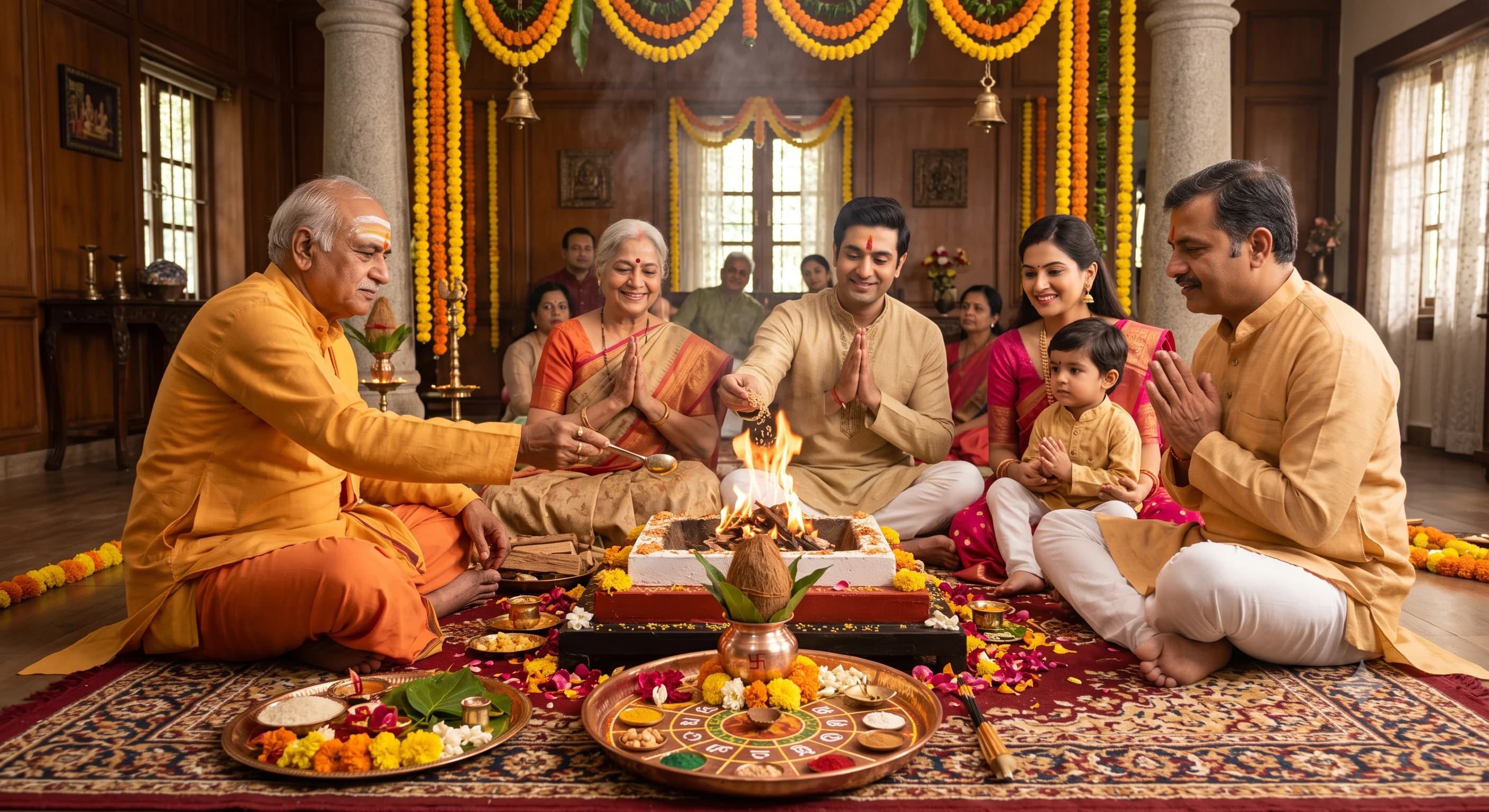
If you want to perform a fuller rite for ancestors, our pandits can conduct a Shradh and Pind Daan.
Frequently asked questions
How often does Amavasya come?
Once every lunar month, about every 29.5 days, so twelve or thirteen times a year.
Should I fast on Amavasya?
It is optional. Some keep a fast, others a simple diet. Follow your health and family tradition.
Is it fine to travel or work on Amavasya?
Yes. Daily work continues as usual. The traditional caution applies mostly to starting major auspicious events.
Looking for personalised guidance?
Speak with an Āchārya, or plan a ceremony with a pandit.