
Mundan, known in the scriptures as Chudakarana, is the Hindu ceremony of a child's first haircut. The hair the baby is born with is shaved off in a short ritual with prayers, and the child is blessed with a long life, health and good understanding. It is one of the sixteen samskaras and one of the most photographed moments in a family's early years.
Key takeaways
- Chudakarana is traditionally held in the first, third or fifth year, often in an odd year of age, though families differ.
- The hair from the womb is considered a link to the past, and shaving it symbolises purification and a fresh start.
- A muhurat is chosen from the panchang and the baby's birth details. Your pandit will confirm it.
- The ceremony can be at home, in a temple or at a family tirtha, and takes about an hour, with the shave itself being brief.
The meaning
Traditional texts say that the first hair carries the impressions of the previous state of being. Removing it marks the child's step into the world outside the womb with a clean start. The shikha, a tuft of hair at the crown, is traditionally left, as it is associated with the seat of intelligence. In practice, many families also see it as a milestone in the baby's growth, with grandparents and relatives gathering to bless the child.
The right age
The Grihya Sutras mention the first or third year. Later texts say the ceremony may be held in an odd year, and some families do it at Upanayanam. In practice, most families hold it between one and three years, many at one year or in the third year.
- Choose a time when the baby is healthy, not teething painfully or unwell.
- Many families take a trip to a family deity's temple, such as Tirupati, Vaishno Devi or the kuldevi's shrine, for the mundan.
- Ask your family elders and pandit, as customs differ across regions and communities.
Choosing the muhurat
Pandits usually look for a favourable tithi, weekday and nakshatra in the panchang. Many traditions prefer Uttarayana (the northward journey of the Sun) and avoid inauspicious periods such as Chaturmas, eclipses and the days of Rahu Kaal. They also check the baby's own nakshatra and details. If you want to understand the terms, our guide to reading a panchang explains them. Where there are special circumstances, such as a pregnancy in the family, ask your pandit how your tradition handles the timing.
Step by step
- Preparation: the family bathes and dresses in clean clothes. The baby is bathed, fed and put in comfortable clothing.
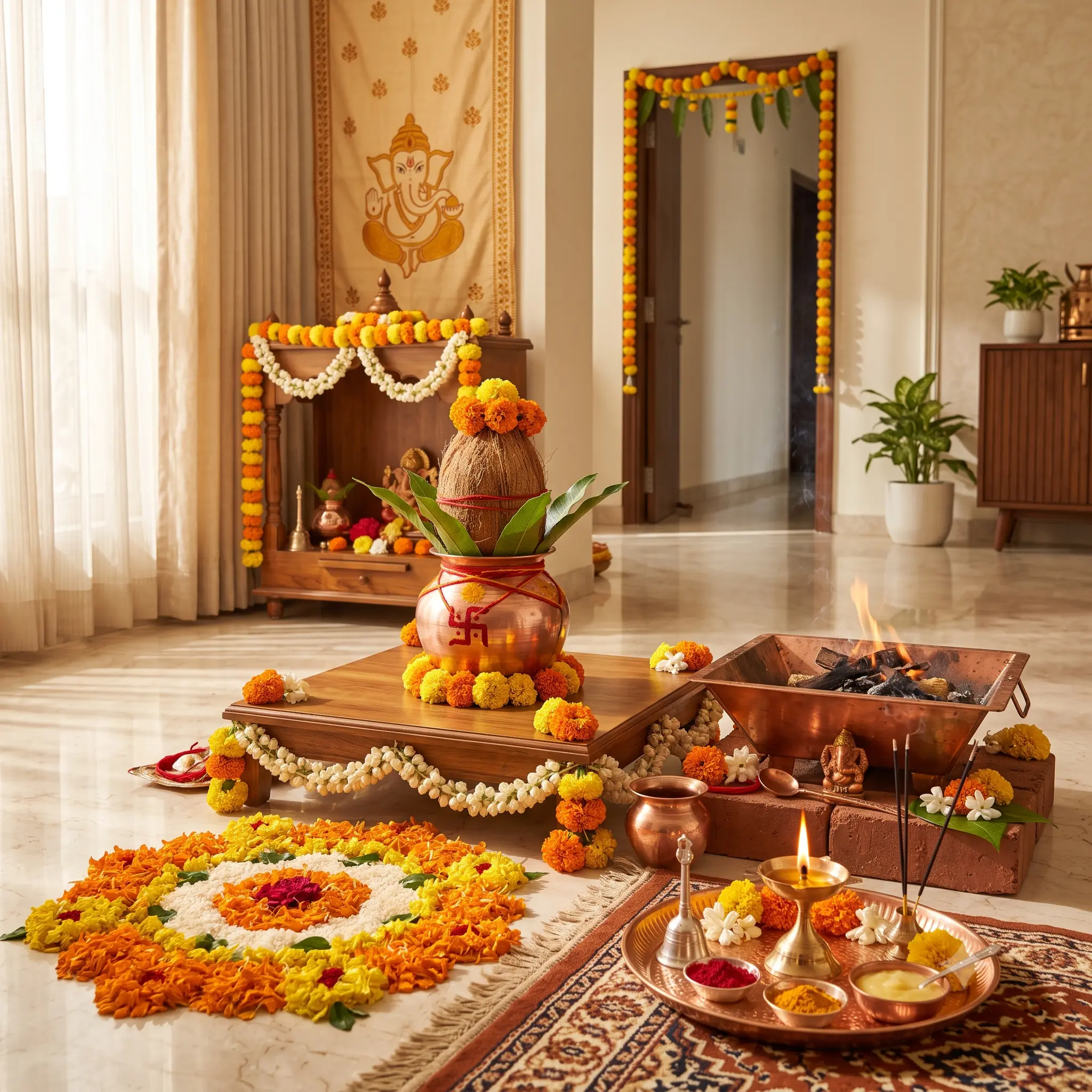
- Ganesh pooja and kalash sthapana: the ceremony begins with Ganesha and a kalash.
- Navagraha pooja: the planets are invoked for blessings.
- Havan: a short havan with ghee and samidha.
- The shave: the baby sits on the mother's or maternal uncle's lap (customs differ), and the barber shaves the hair, leaving the shikha if the family follows the tradition. A little turmeric, sandalwood paste or ghee is applied afterwards to soothe the scalp.
- Offering the hair: the hair is collected in a cloth and offered to a river, a tree or the temple, as per the family custom.
- Blessings: the baby is bathed again and dressed in new clothes. Elders give blessings and prasad is shared.
Samagri
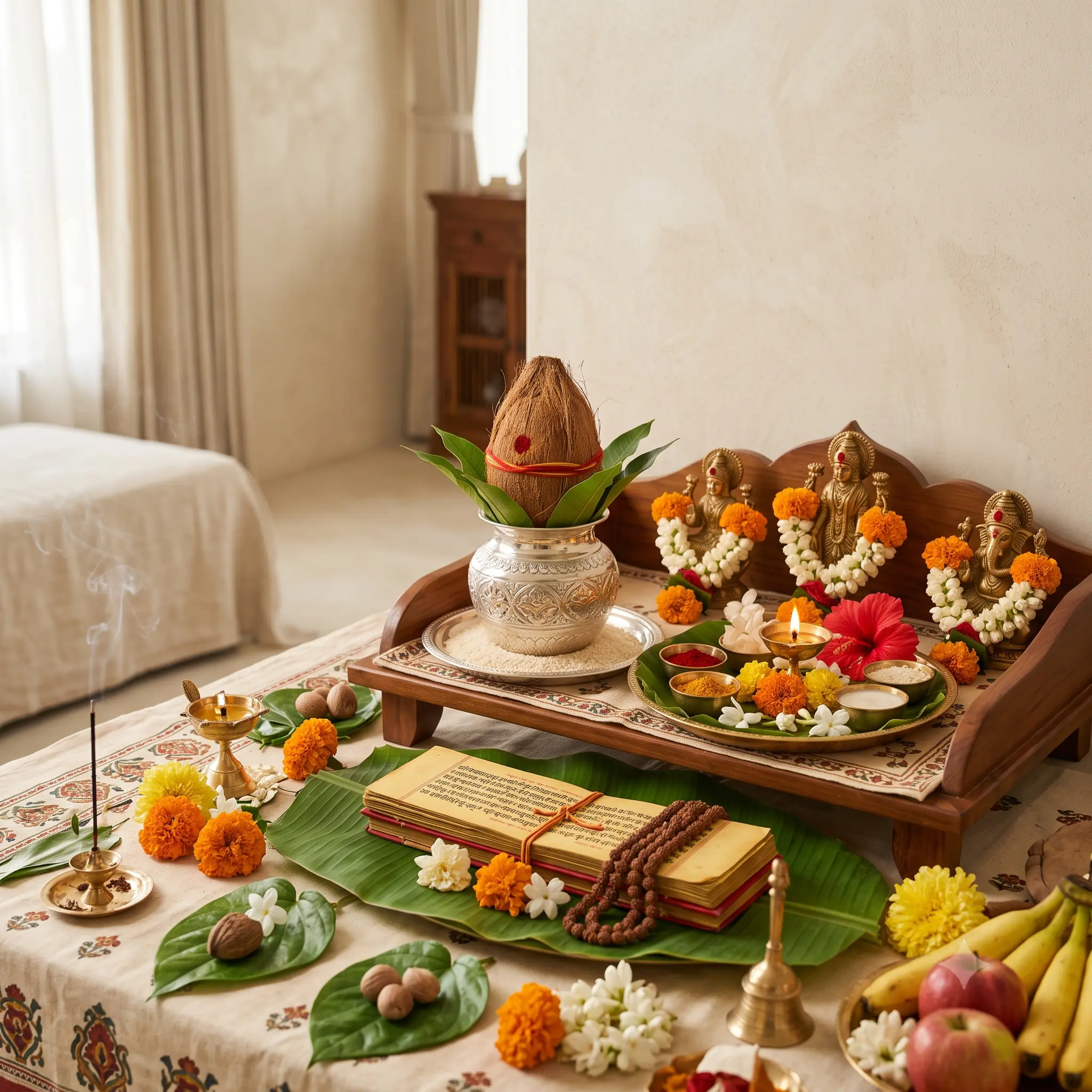
- Kalash with water, mango leaves and coconut
- Roli, akshat, turmeric, kumkum, flowers
- Havan kund, ghee and samidha
- Cloth to collect the hair, sandalwood paste or turmeric for soothing
- New clothes for the baby, sweets and fruit for prasad
The Mundan and Naamkaran samagri kit has the common items in one pack, and our pooja page lets you arrange a pandit.
Practical tips for the day
- Time the shave after a feed and a nap, when the baby is calm.
- Ask the barber to use a clean razor and be gentle. Use a new blade, and take care near the soft spot (fontanelle).
- Keep a familiar toy, a family member to hold the baby and a change of clothes ready.
- In hot or cold weather, make the baby comfortable. Apply a soothing paste afterwards and keep the head covered outdoors.
- Plan photos before the shave, as many babies are tired after.
Combining it with Naamkaran
Some families hold Mundan and Naamkaran on the same day, as the ceremony is long and relatives travel. If the baby was named earlier, the Mundan can be a separate simple event. Read about Naamkaran Sanskar for the naming ceremony.
Frequently asked questions
Is Mundan the same for girls?
Yes, in many communities girls also have Chudakarana. Practices vary: some families do it for boys only, some for both, and some shave only a symbolic portion.
Does it make hair grow thicker?
This is a popular belief, but hair growth depends on genetics and nutrition. The ceremony is valued as a samskara and a family milestone.
Can we do it abroad?
Yes. Many NRI families hold it at home with a local barber and an online or visiting pandit. Confirm the muhurat for your city.
Looking for personalised guidance?
Speak with an Āchārya, or plan a ceremony with a pandit.