
Shradh is the Hindu practice of remembering and honouring one's ancestors with food, water and prayer. The word comes from shraddha, meaning faith and sincerity. It is an expression of gratitude to the people who gave us life, name and family, and it is observed with quiet dignity rather than celebration.
Key takeaways
- Pitru Paksha is the fortnight of ancestors, the waning phase of the lunar month that ends on Sarva Pitru Amavasya (Mahalaya Amavasya).
- Shradh is performed on the tithi (lunar day) on which the person passed away, not on the calendar date.
- The core rites are tarpan (water with sesame), pind daan (rice balls) and feeding of Brahmins, the poor and animals.
- If the tithi is unknown or cannot be kept, Sarva Pitru Amavasya is the day for all ancestors.
Why Hindus perform Shradh
Tradition teaches that every person owes three debts: to the gods, to the sages and to the ancestors. Shradh is the way to acknowledge the debt to the pitrs, the departed ancestors. It is seen as an act of remembrance and blessing, and many families find it a meaningful time to gather, recall stories and pass on family history to children.
Pitru Paksha
Pitru Paksha is a period of about sixteen lunar days in the dark fortnight that follows Bhadrapada Purnima, ending with Sarva Pitru Amavasya. Each day corresponds to a tithi. The family performs Shradh on the tithi of the death of the person being remembered, in whichever year they passed. The precise dates change every year, so check the panchang of your city. Our guide to reading a panchang explains how tithis work.
Shradh can also be done at other times, for example on the death anniversary every year, at a tirtha like Gaya, Prayagraj, Haridwar, Varanasi, Ujjain or Nashik, or by tradition on certain Amavasyas. See also our article on Amavasya.
The main rites
Tarpan
An offering of water mixed with black sesame, barley and kusha grass, poured while the name and gotra of the departed are recalled. It is the simplest and most widely done rite.
Pind daan
Balls (pindas) of cooked rice, barley flour, sesame and ghee or honey are offered to the ancestors, with mantras. Pind daan is often done at a tirtha, and many families perform it once on a pilgrimage to Gaya.
Bhojan and daan
A sattvic meal is prepared and offered, then shared. Brahmins are fed, charity is given, and a portion of the food is set aside for a cow, a dog, a crow and ants (the Panchabali). Feeding the crow is a long-standing symbol of reaching the ancestors.
Who performs Shradh
Traditionally the eldest son performs the rites, and after him other sons, grandsons or male relatives. Today many families include daughters, wives, daughters' sons or other close relatives, particularly where there is no son. Practice differs by community, and the intention to honour the departed is what matters. If you are unsure, ask your pandit for the way your lineage follows.
Rules and observances
- Bathe early and wear clean clothes. The person performing Shradh is usually not to eat until the rites are over.
- The meal is pure vegetarian. Many families avoid onion, garlic and certain vegetables in the Shradh meal.
- Keep the days simple. Many families avoid weddings, housewarmings, new purchases and celebrations in Pitru Paksha, though customs differ.
- Speak of the departed with respect, and avoid arguments in the house during the rites.
Samagri
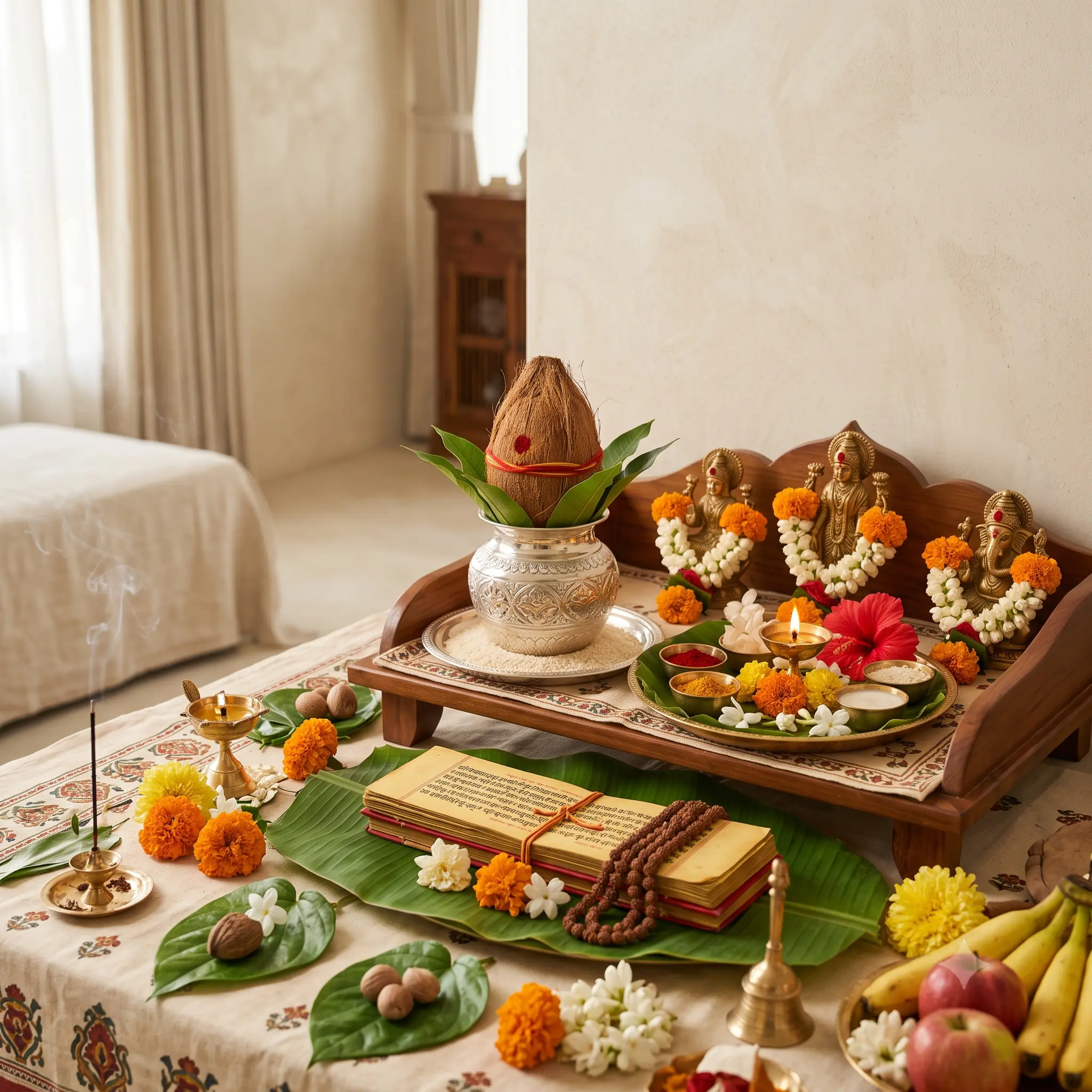
- Black sesame, barley, kusha grass, rice and ghee
- Honey, milk, flowers, tulsi leaves and a copper vessel
- Cooked rice and other sattvic dishes for the offering
- Roli, akshat, incense and a lamp
You can find the full set in our Shradh and Pind Daan kit, and read the Shraddh ceremony guide for the sequence.
For families abroad
Many NRIs perform tarpan at home on the correct tithi for their city, or arrange a pandit to perform the rites in India on their behalf. You can arrange a Shradh and Pind Daan with a pandit, including online guidance for a simple home version.
Frequently asked questions
What if I do not know the tithi of death?
Perform Shradh on Sarva Pitru Amavasya. A pandit can also help trace the tithi from the date of death.
Is Shradh done for a child or an unmarried person?
Yes, with the practice your tradition follows. Some communities observe specific days. Ask your pandit.
Is it compulsory?
It is a religious duty in the Hindu tradition and also a personal act of remembrance. If circumstances prevent the full rites, a simple tarpan and a prayer with a pure heart are considered valuable.
Looking for personalised guidance?
Speak with an Āchārya, or plan a ceremony with a pandit.