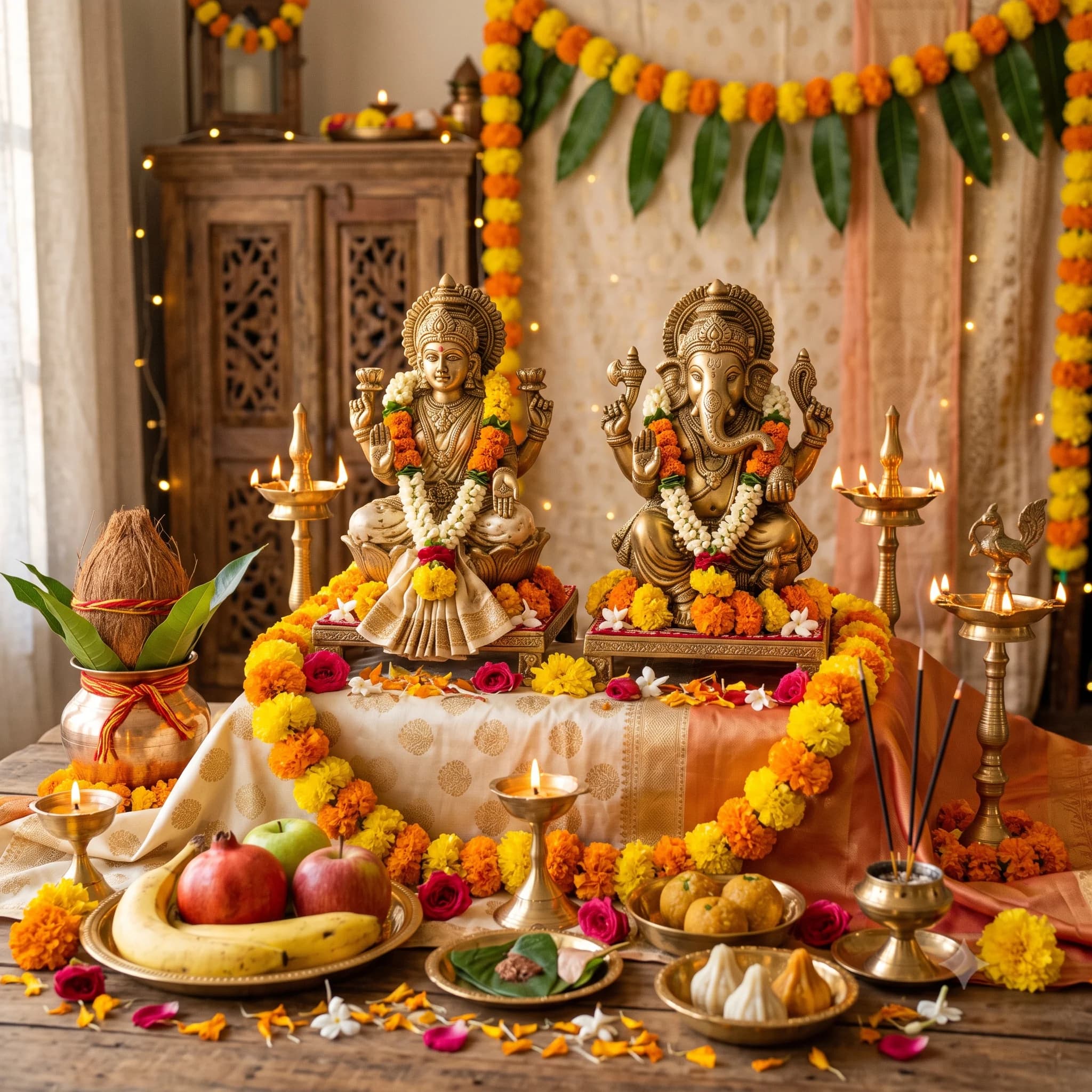

Karwa Chauth 2026 falls on Thursday, 29 October for most of India, the day married women keep a dawn-to-moonrise fast for their husband's wellbeing. Some panchang tools set to a US or Canada time zone show Wednesday, 28 October instead - this is a real timezone effect on the lunar tithi, not a typo, and this page explains why and how to check your own city.
Key takeaways
- In India, Karwa Chauth 2026 is on Thursday, 29 October. The Chaturthi tithi that defines the festival is active through that evening in Indian Standard Time.
- Families in North America and some other time zones may see Wednesday, 28 October on a panchang set to their local time - check a panchang for your own city rather than assuming the Indian date applies.
- Moonrise is the signal to break the fast. It is typically around 8:00 PM to 8:20 PM in most Indian cities, but varies by 15-20 minutes depending on your exact location.
- The puja muhurat (per Drik Panchang for Delhi) is about 5:38 PM to 6:56 PM, and moonrise is at 8:17 PM - both shift by a few minutes for other Indian cities, so check your own city's panchang.
Why the date can differ by location
Karwa Chauth is observed on Kartik Krishna Chaturthi, the fourth day of the waning moon in the Hindu month of Kartik. A tithi does not align with midnight-to-midnight calendar days - it runs for a fixed duration based on the moon's position and can begin or end at any hour. When that changeover happens to fall in the evening, a family a few time zones away can find the tithi (and so the festival) assigned to a different calendar date than a family in India, even though both are marking the exact same astronomical moment.
This is the same effect we cover in our guide to muhurat for families abroad. The safest approach is to check a trusted panchang set to your own city - not to assume the Indian date automatically applies, and not to assume a US or UK date applies if you are in India.
Karwa Chauth 2026 at a glance
- Festival: Karwa Chauth (Karva Chauth)
- Date in India: Thursday, 29 October 2026
- Date in some overseas time zones: Wednesday, 28 October 2026 - confirm for your city
- Fast: Sunrise (after sargi) to moonrise, nirjala (without water) for most observers
- Moonrise (typical, most Indian cities): around 8:00 PM to 8:20 PM - varies by city
What Karwa Chauth is
Karwa Chauth is a fast kept mainly by married Hindu women, mostly across North India, for the long life and wellbeing of their husband. The day begins before sunrise with sargi, a meal sent by the mother-in-law, after which the woman does not eat or drink until she sights the moon in the evening. The day includes a daytime gathering for mehendi, bangles and the Karwa Chauth katha, and an evening puja performed with other women of the family or neighbourhood.
Sargi: the pre-dawn meal
Sargi is eaten before sunrise, typically given by the mother-in-law to her daughter-in-law. It usually includes fruits, dry fruits, sweets (such as feni or vermicelli), and something refreshing like coconut water, to help sustain the fast through the day. Once the sun rises, nothing is eaten or drunk until the moon is sighted that evening.
Puja thali: what to keep ready
- Karwa (a small earthen or metal pot) with a lid, used to offer water to the moon
- A diya, incense and a plate for aarti
- Sindoor, mehendi, bangles, and a small mirror and comb
- Rice (akshat), flowers, and sweets as prasad
- A sieve (chalni), traditionally used to view the moon and then the husband's face through it
- A Karwa Chauth katha book or recording, and a picture of Goddess Parvati or Karwa Mata
Puja vidhi: the evening sequence
- Gather for the katha: women sit together in the evening, often before the formal puja, to listen to or read the Karwa Chauth vrat katha.
- Puja thali is prepared with the items above, and the Karwa is filled with water.
- Aarti is performed together, usually seated in a circle, each woman holding her thali.
- Moon sighting: once the moon rises, it is viewed through the sieve, followed by the husband's face through the same sieve.
- Water is offered to the moon from the Karwa, and the woman breaks her fast - usually by her husband offering her the first sip of water or bite of food.
Some families also keep a small murti or picture of Ganesh and Gauri for the puja. If your family follows a specific regional tradition - Punjabi, Rajasthani, or from elsewhere - the core structure of sargi, daytime fast, katha, and moonrise puja stays the same, though small details can differ.
Who typically observes the fast
Karwa Chauth is most commonly observed by married women, and in many families, by women who are engaged to be married. Practices around exceptions - pregnancy, illness, a first-year bride's observance, or whether unmarried women keep it for a future spouse - vary by family and region. There is no single rule that applies everywhere, so this is worth discussing with your own family's elders, or you can talk to our astrology team online if you would like guidance on your specific situation and the correct muhurat and moonrise time for your city.
Frequently asked questions
What is the exact date of Karwa Chauth 2026?
In India, Karwa Chauth 2026 falls on Thursday, 29 October. Some panchang tools set to a North American time zone show Wednesday, 28 October, because of how the Chaturthi tithi aligns with the clock in that time zone. Check a panchang for your own city to be certain.
What time does the moon rise on Karwa Chauth?
Moonrise is typically between 8:00 PM and 8:20 PM in most Indian cities, but this varies by 15-20 minutes depending on your exact location. Use a panchang for your city for the precise time, since the fast is broken only after the moon is actually sighted.
Can the fast be broken before moonrise?
Traditionally, no - the fast continues until the moon is sighted. Some families make exceptions for health reasons; this is a personal and family decision.
Do I need a pandit for Karwa Chauth?
Most families perform the puja and katha themselves, without a pandit. If you would like confirmation of the exact muhurat and moonrise time for your city, or guidance on a specific question about the vrat, you can book an online consultation with our astrology team.
Looking for personalised guidance?
Speak with an Āchārya, or plan a ceremony with a pandit.