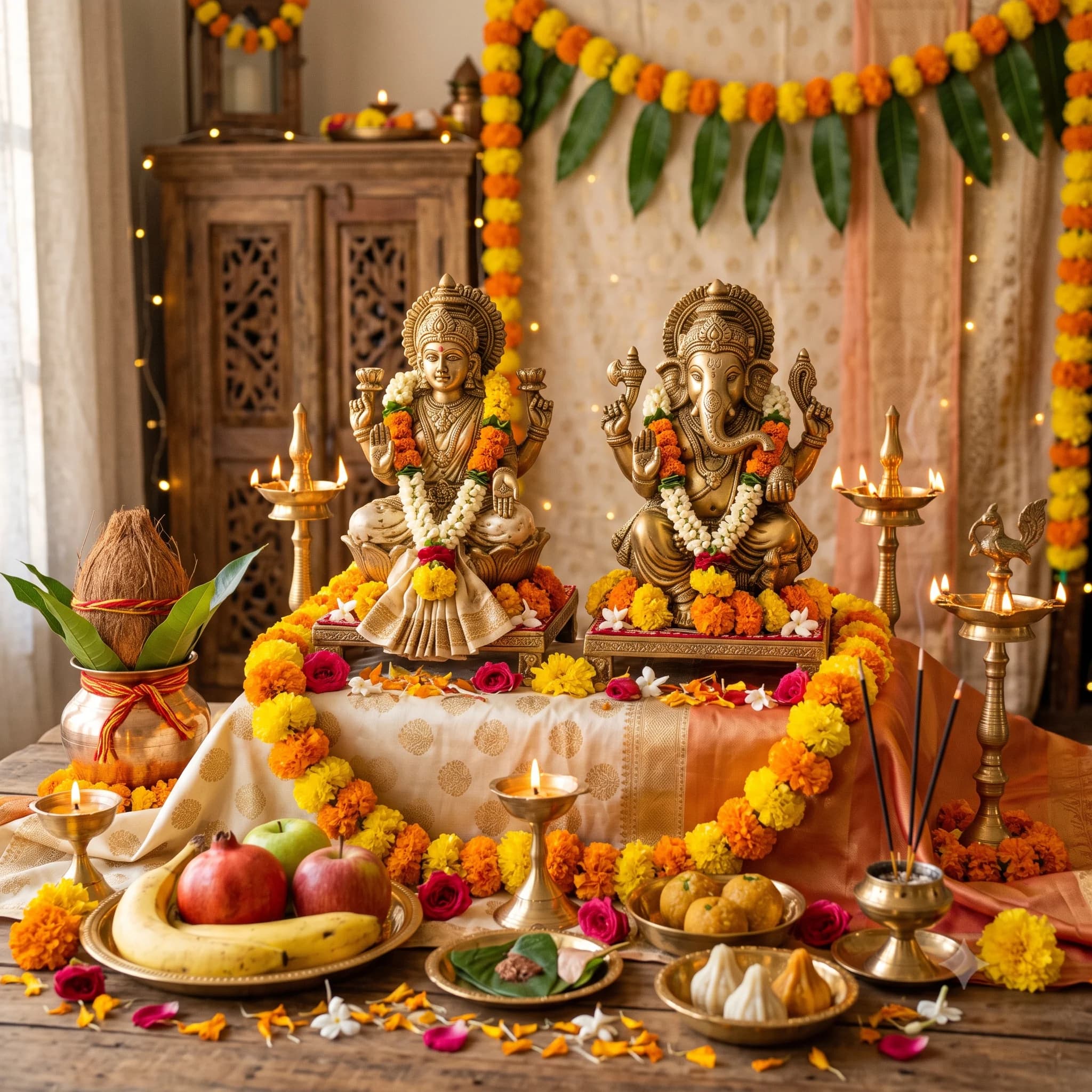

Vijayadashami is observed with a few simple rituals at home: a prayer to Goddess Aparajita, worship of the Shami tree, and the puja of weapons, tools and books. The day is also considered favourable for beginnings. This guide gives a practical vidhi that families can follow, with a note that customs vary by region.
Key takeaways
- The main puja is traditionally done in the afternoon (Aparahna), within the Vijay muhurat given in your city's panchang.
- Three common rituals: Aparajita Devi puja, Shami puja, and Shastra (Ayudha) puja.
- A simple version takes 45 minutes to an hour, with items easy to find at home.
- Read the background in our guide to Dussehra, its legends and traditions.
The right time
Vijayadashami puja is generally performed in the Aparahna kaal, the period after midday and before the late afternoon, and a Vijay muhurat is listed in the panchang. Ramlila effigies are burned at sunset or in the evening. Because timings change with the city, use a panchang for your location. Our guide on reading a panchang helps. Families abroad can see muhurat for NRIs.
Samagri
- Clean cloth, a wooden chowki or a clean surface
- Images of Goddess Durga or Aparajita, and of Rama if you worship Ram Darbar
- Roli, akshat, turmeric, sandalwood, flowers, garland
- Incense, camphor, a ghee lamp, a bell
- Fruit, sweets, betel leaf, supari and a coconut
- Tools, books, a pen, a vehicle key or an instrument for Shastra Puja
- Shami or Apta leaves, or a Shami branch if you can get one
Step by step
- Preparation: bathe, wear clean clothes, and clean the puja space. Set up the chowki and the images.
- Sankalp: state your intention to worship on Vijayadashami for the wellbeing and success of the family.
- Ganesh pooja: begin with Ganesha, offering flowers, akshat and a lamp.
- Aparajita Devi puja: Aparajita means the unconquered. Many families draw a small lotus or a mark with sandalwood paste or rice on the puja space as her seat. Invoke the goddess, offer flowers, roli, incense and a lamp, and pray for victory over difficulties.
- Ram Darbar or Durga puja: offer prayers to Rama, Sita, Lakshmana and Hanuman if that is your family's practice, or to Goddess Durga.
- Shami puja: go to a Shami tree if one is available, or place Shami leaves on the puja tray. Offer water, roli, akshat and flowers, and circumambulate. Remember the Pandavas' story and pray for strength and good fortune.
- Shastra and Ayudha puja: clean your tools, books, vehicle or instruments and place them on a cloth. Apply a little turmeric and roli, and offer flowers. Students can worship their books, and craftspeople their tools. Some families begin a new study or a new venture today.
- Aarti and prasad: perform aarti and share the prasad.
- Exchange of leaves: in Maharashtra and Karnataka, exchange Apta or Shami leaves with elders and friends, saying a word of blessing.
Customs that vary
- In Bengal, Dashami is the day of immersion of Durga and the exchange of Bijoya greetings.
- In South India, Ayudha Puja is held on Navami and Vijayadashami is for Vidyarambham.
- In many northern homes, the family watches or attends Ramlila and the burning of Ravana.
Ask a family elder or your pandit which sequence your tradition follows. You can also arrange a Durga Saptashati path or find support through a short consultation.
For families abroad
You can do a complete puja with an image of Durga or Rama, a lamp and the items from this list. Shami leaves are hard to find, so ask your pandit for a suitable alternative. See our guide to samagri abroad.
Frequently asked questions
Can I do Vijayadashami puja in the morning?
The Aparahna time is traditionally preferred. If you cannot, do it as close as you can and consult your pandit.
Is it good to buy new things on Dussehra?
Many families consider it an auspicious day for beginnings, including purchases and new ventures, and honour the tools of their work. This is tradition, not a requirement.
Do we need a pandit?
No. A simple puja can be done by the family. A pandit helps with the muhurat and mantras, especially for a larger ceremony.
Looking for personalised guidance?
Speak with an Āchārya, or plan a ceremony with a pandit.