Karva Chauth is kept with a few clear steps: a pre-dawn sargi, a day of fasting, an evening puja with the karva, the katha, and the offering to the moon. This guide gives a practical vidhi, with a note that customs differ by family and region. For the background and stories, read our guide on Karva Chauth, its meaning and traditions.
Key takeaways
- Eat sargi before sunrise, then fast until the moon is seen. A milder fast is acceptable if your health needs it.
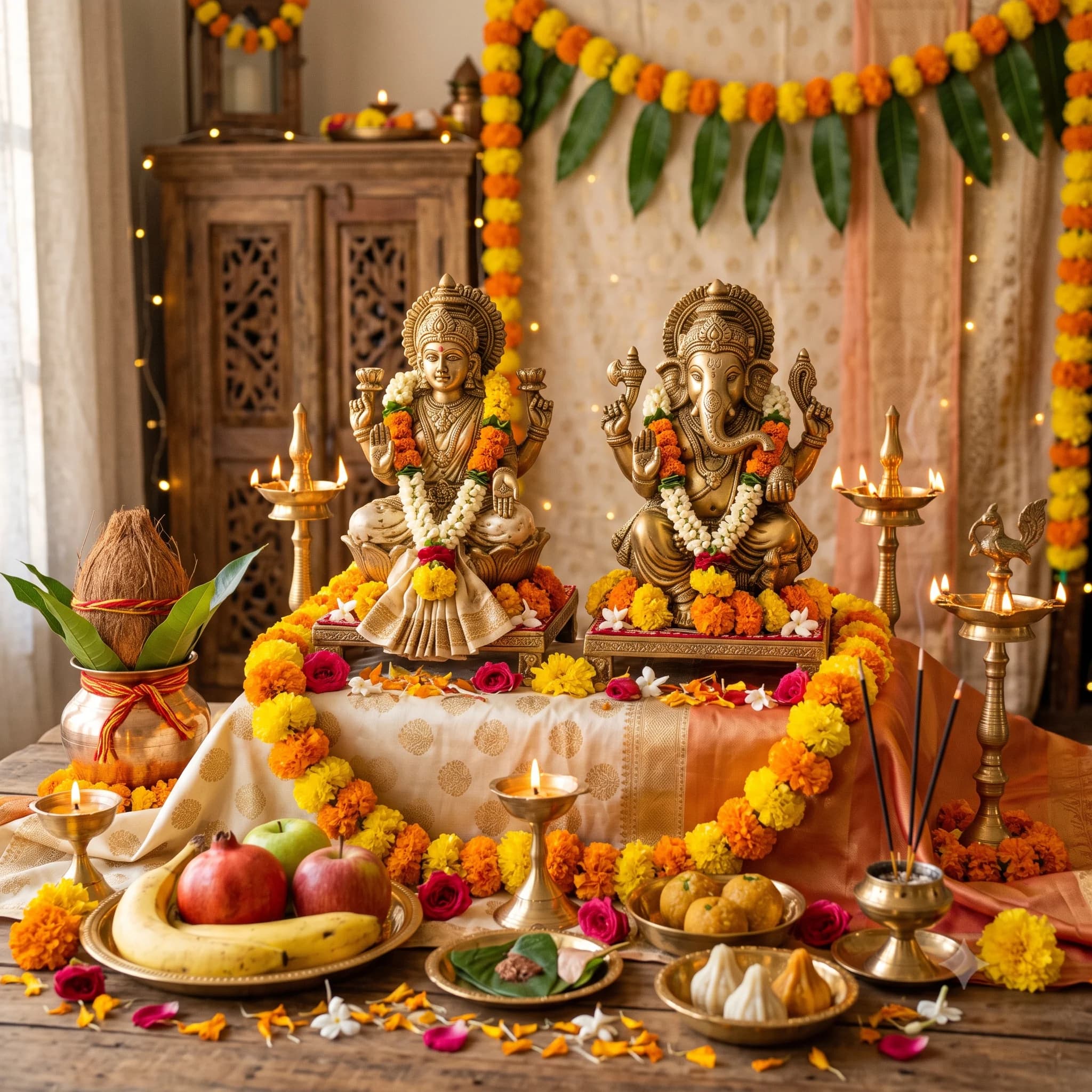
- The evening puja worships Gauri (Parvati), Shiva, Ganesha, Kartikeya and the Karva.
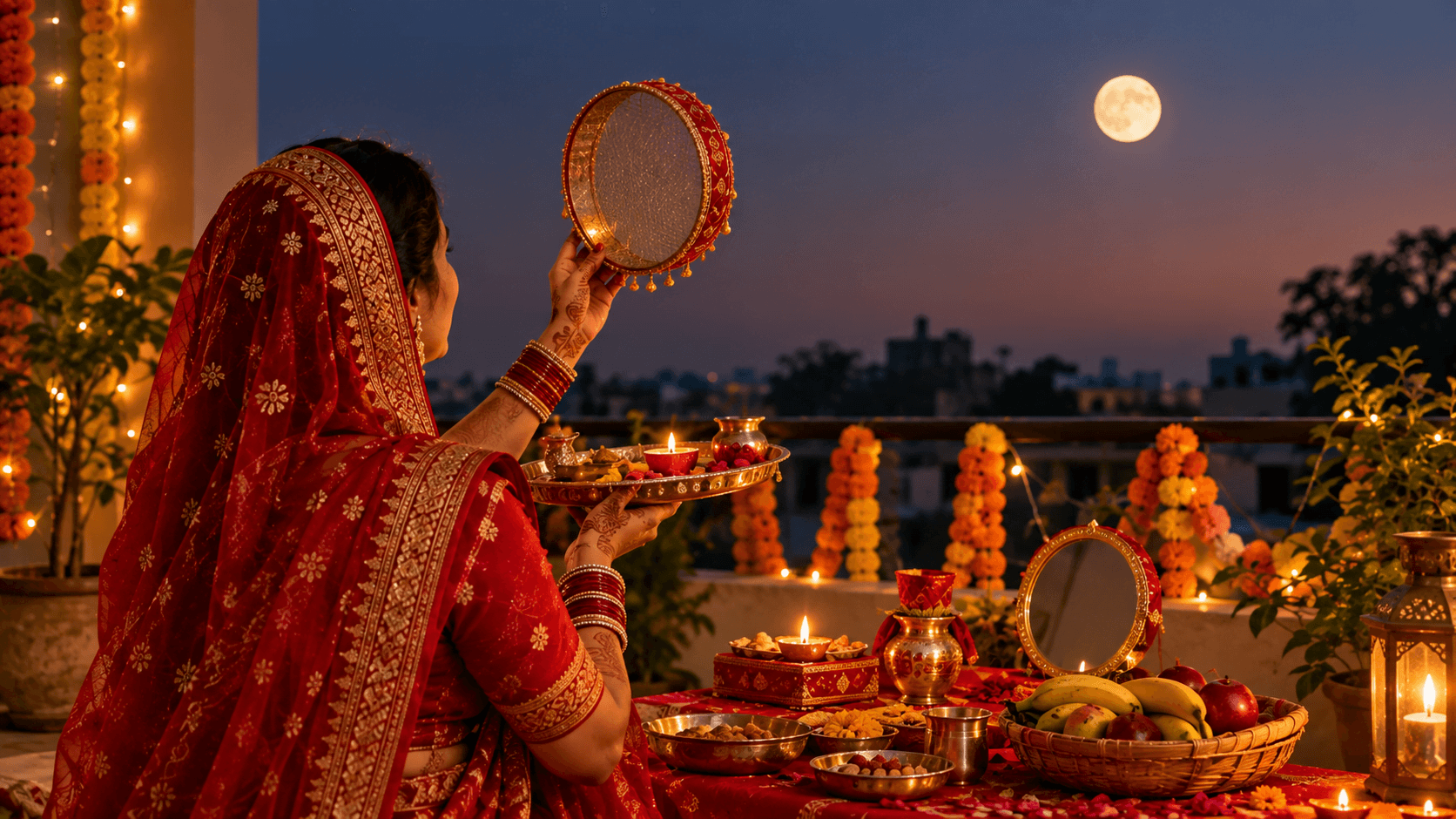
- After moonrise, offer water to the moon, view it through a sieve, then look at your husband. He offers the first water.
- Check the moonrise time for your city.
Samagri
- Two clay karvas with lids, one for water and one for gifts or sweets
- A puja thali with roli, akshat, turmeric, sindoor and flowers
- A ghee lamp, incense and camphor
- A sieve (chhalni), a water pot and a clean cloth
- Image or clay figure of Gauri (Parvati), Shiva and Ganesha
- Wheat, rice or dry fruit, sweets and fruit
- Solah shringar items: bangles, bindi, mehendi, a new sari or festive clothes
The morning: sargi and sankalp
- Wake before sunrise, bathe and prepare for the day.
- Eat the sargi: fruit, dry fruit, sweets, tea or milk. Drink water before the sun rises.
- Take the sankalp: resolve to keep the fast for the long life and wellbeing of your husband and family.
- Keep the day calm. Many women apply mehendi and prepare for the evening.
Fasting rules
- The traditional fast is without food and water (nirjala) until the moon is seen.
- Do not eat or drink before the arghya in the traditional version.
- Avoid sleeping through the day and keep a gentle routine.
- Pregnant women, those with medical conditions, and people who find the fast hard may take fruit or water. Many families and pandits accept this. Health matters more than hardship.
The evening puja
- Dress in festive clothes and adorn yourself. Gather the women of the family or neighbourhood.
- Set up the puja space with the images of Gauri, Shiva and Ganesha, a lamp and the karvas.
- Worship Ganesha first. Offer flowers, roli, akshat and a lamp.
- Worship Gauri (Parvati) with sindoor and shringar items, praying for a long, happy marriage. Worship Shiva, Kartikeya and the Karva.
- Listen to or read the Karva Chauth katha. Pass the thali in a circle (pheri), exchanging it seven times with the women in the group in some traditions.
- Offer the sweets and fruit, and perform aarti.
- Give the karva and the gifts to the elders of the family and take their blessings. A mother-in-law traditionally gives a gift too.
Moonrise and breaking the fast
- Check the moonrise time for your city and go to the roof, balcony or a clear sky.
- When the moon appears, view it through the sieve with a lamp placed in it.
- Offer water (arghya) to the moon with a prayer, scattering rice or flowers.
- Turn and look at your husband through the sieve. Touch his feet and take his blessing.
- He gives you the first sip of water and the first bite of food, and you break the fast.
- Eat a light, sattvic meal, and avoid heavy food and spices at first.
Husbands who fast
If the husband is fasting too, he joins in the puja, offers water to the moon and breaks the fast together with his wife, each giving the other the first sip. The ritual is a shared one in many modern homes.
For families abroad
- Use the moonrise time for your city. Apps and almanacs give it.
- Clay karvas are sold online and at Indian stores. A small clean pot can also be used.
- If the moon is hidden by clouds, follow the moonrise time and ask your pandit about your tradition.
- Join a community puja at a temple or a gathering of friends.
See also muhurat for NRIs. For the Gauri puja, you can consult an Āchārya about the right mantras for your family.
Frequently asked questions
Can I drink water during the fast?
The strict form says no. Many people take water for health reasons. Do what is safe.
What can I eat in the sargi?
Fruit, dry fruit, sweets, a light meal and milk or tea are common. Choose what keeps you steady through the day.
Do I need a pandit?
No. The family can do the puja and the katha. A pandit helps with the mantras if you wish.
Looking for personalised guidance?
Speak with an Āchārya, or plan a ceremony with a pandit.