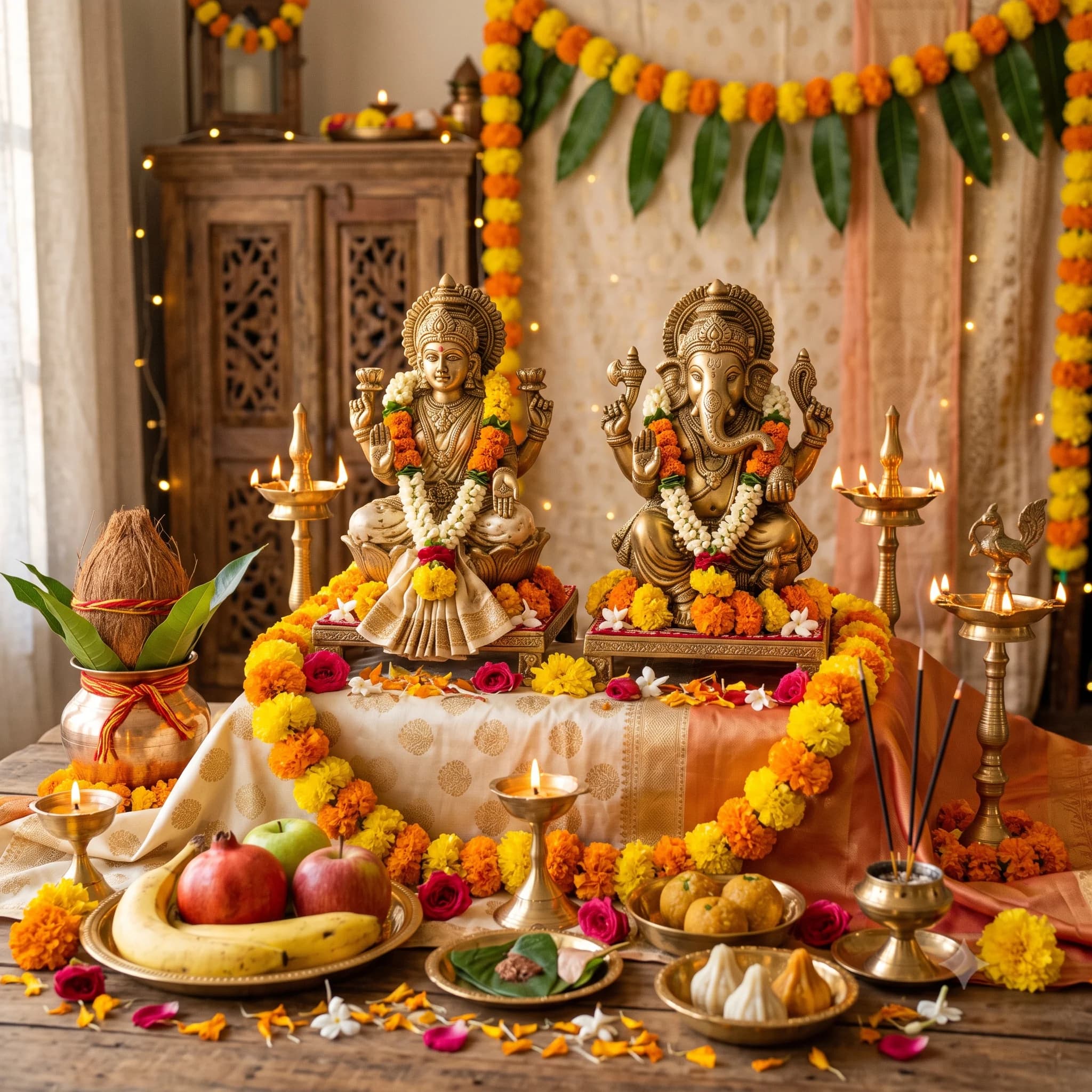
Karva Chauth is a one-day fast kept by married women, traditionally for the long life and wellbeing of their husbands. It begins before sunrise and ends after the moon is seen in the evening. In recent years many couples keep it together, as an expression of love and shared commitment.
Key takeaways
- Karva Chauth falls on the fourth day (Chaturthi) of the waning fortnight in the month of Kartik, per the Purnimanta calendar, a few days before Diwali.
- The fast runs from sunrise to moonrise, with a pre-dawn meal called sargi.
- The puja is done in the evening, followed by offering water to the moon and breaking the fast.
- It is widely observed in North and Central India, and increasingly across the diaspora.
What the name means
"Karva" (also karwa) is a small clay pot with a spout, used to offer water to the moon, and "chauth" means the fourth day of a lunar fortnight. The pot itself is a symbol of the festival, and is often decorated and filled with sweets or small gifts.
When it is observed
The festival is observed on Kartik Krishna Chaturthi in the Purnimanta calendar, which is the same lunar day as Ashwin Krishna Chaturthi in the Amanta calendar followed in parts of western and southern India. It falls roughly nine days before Diwali. Since the moonrise time varies by city, the fast ends at different times in different places. See our guide to using the right panchang abroad.
The legends
- Veervati: the most told story is of Veervati, a young bride who was fasting at her parents' home. Her brothers, unable to see her in distress, made a false moonrise with a lamp behind a tree, and she broke her fast. Her husband soon fell ill. She repeated the fast with devotion in later years, and he recovered.
- Karva: a folk tradition tells of a devoted woman named Karva whose faith saved her husband from a crocodile.
- Draupadi: in the Mahabharata tradition, Draupadi kept a fast on the advice of Krishna when Arjuna was away in the Himalayas.
These stories are told during the evening puja. They carry a theme of devotion, care and the bond between spouses.
Sargi, the pre-dawn meal
In many families, the mother-in-law prepares the sargi before sunrise: fruit, dry fruit, sweets such as feni or mathri, and tea or milk, as a gift of care and blessing. The woman eats it before dawn to have strength for the day. Sargi is a symbol of the bond between the two families.
The evening puja and moon ritual
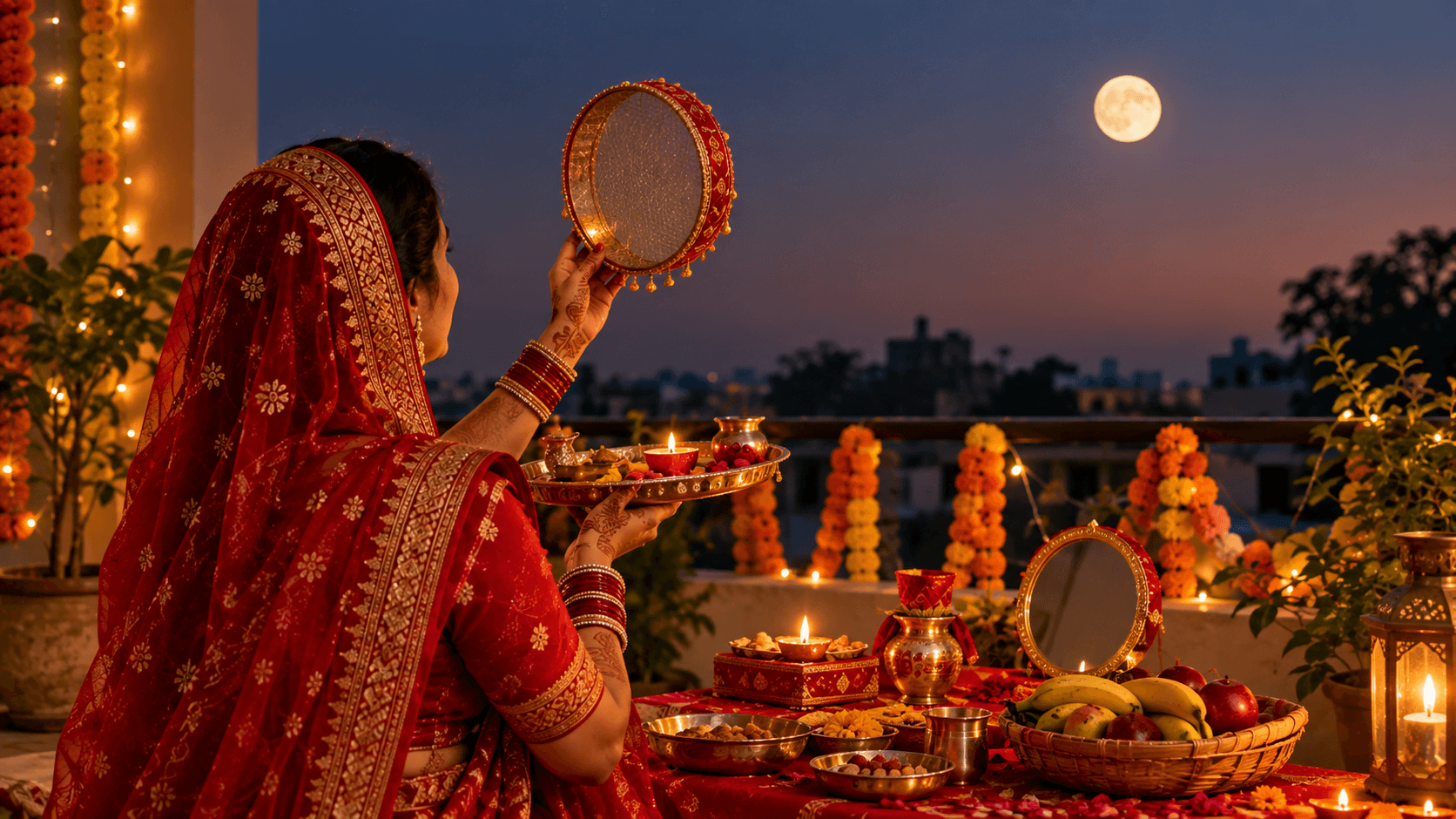
In the evening, women dress in festive clothes, often red, and adorn themselves in the traditional solah shringar, with bangles, bindi and mehendi. They gather for the Karva Chauth katha, worship Gauri (Parvati), Shiva, Ganesha and Kartikeya, and exchange karvas. After the moon rises, they offer water to it, view it through a sieve (chhalni) and then look at their husband through the sieve. The husband gives the first sip of water and the first bite of food, and the fast is broken. For the steps, read our guide to the Karva Chauth puja vidhi.
Regional flavours
- Punjab and Haryana: sargi from the mother-in-law, a thali exchange and community gatherings.
- Uttar Pradesh and Rajasthan: elaborate katha and group worship.
- Delhi and the diaspora: community puja, rooftop moon-viewing and gifts.
How it is changing
- Many husbands now fast with their wives.
- Single women and couples who are engaged sometimes keep it too.
- Those with health conditions, pregnancy or a long working day may choose a fruit or water-allowed version, and many families accept this.
The core of the festival is love and care. If keeping the strict fast is not suitable, speak to your family and pandit, and choose a way that is safe.
Frequently asked questions
Is Karva Chauth only for married women?
Traditionally yes, but today many people of all kinds keep it. Practice depends on the family.
Is the fast without water?
The traditional fast is without food and water (nirjala), but many people keep a milder version for health reasons.
What if the moon is not visible because of clouds?
Many families follow the moonrise time from the panchang and offer water facing the moon's direction. Ask your elders or pandit for your tradition.
Looking for personalised guidance?
Speak with an Āchārya, or plan a ceremony with a pandit.