
Navratri means "nine nights". For nine days, devotees worship Goddess Durga in her nine forms, celebrating the victory of the divine feminine over adharma. It is among the most widely observed festivals in India and among the diaspora, kept in homes, temples and community halls with fasting, prayer, music and dance.
Key takeaways
- There are two major Navratris in a year: Chaitra Navratri in spring and Sharad (Shardiya) Navratri in autumn. Two Gupt Navratris are kept by some traditions.
- Each day is dedicated to one form of Durga, from Shailputri on day one to Siddhidatri on day nine.
- The nine days begin with kalash sthapana (Ghatasthapana) and often end with Kanya Puja on Ashtami or Navami.
- Fasting is optional and personal. Customs differ widely between regions.
The nine forms of Durga, day by day
- Shailputri: daughter of the Himalaya, shown on a bull with a trident and lotus. Day one marks the start of the festival and the installation of the kalash.
- Brahmacharini: the goddess in her form of penance and devotion, with a rosary and kamandalu.
- Chandraghanta: wears a crescent moon shaped like a bell on her forehead, a symbol of courage and grace.
- Kushmanda: the form associated with the creation of the universe with her gentle smile.
- Skandamata: mother of Skanda (Kartikeya), who holds the infant on her lap.
- Katyayani: the warrior form, worshipped as the slayer of Mahishasura.
- Kalaratri: the fierce, dark form that destroys fear and ignorance.
- Mahagauri: radiant, serene and fair, the goddess of purity. Ashtami is often observed on this day.
- Siddhidatri: the giver of siddhis, or spiritual accomplishments. Navami completes the nine days.
The day on which each form is worshipped can shift slightly when tithis are combined or skipped in a year, so follow a panchang for your city.
How the nine days are observed
Kalash sthapana (Ghatasthapana)
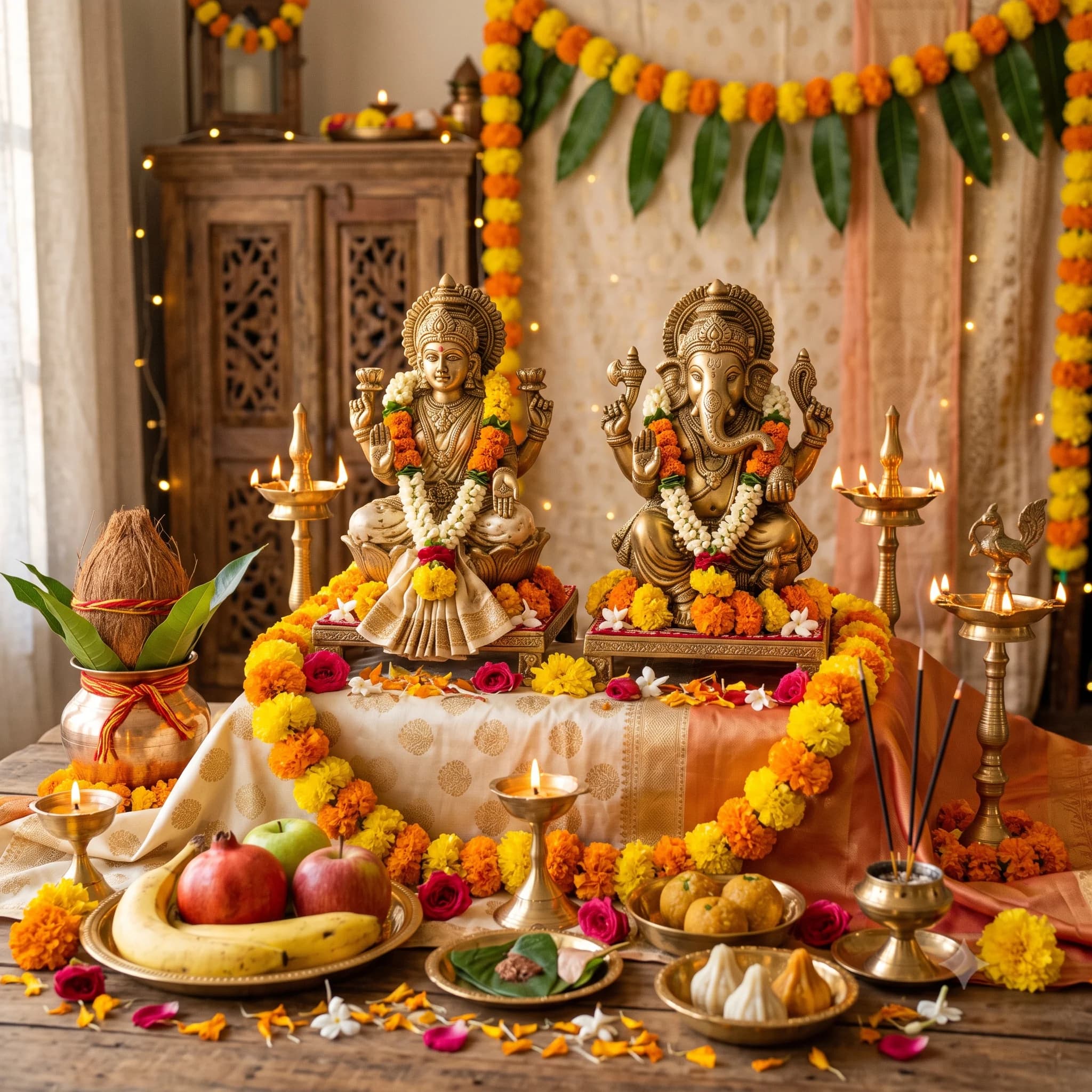
On Pratipada, the first day, a clean earthen pot or tray is prepared, a layer of soil is spread and barley (jau) is sown. A kalash filled with water, topped with mango leaves and a coconut wrapped in red cloth, is installed on it. Ghatasthapana is done in the muhurat prescribed in the panchang, usually in the morning. An akhand jyot (a lamp kept burning through the nine days) is lit by some families.
Daily worship
Each morning the goddess of that day is worshipped with flowers, incense, a lamp and prasad. Many families read the Durga Saptashati (also called Devi Mahatmya), a text of 700 verses in 13 chapters, over the nine days. You can also arrange a Durga Saptashati path with a pandit.
Fasting
Some keep all nine days, some the first and last, some only Ashtami. Common fasting foods include fruit, milk, kuttu or singhara flour, sabudana and rock salt (sendha namak), while grains, onion and garlic are set aside. Fasting is a personal discipline and should suit your health.
Ashtami, Navami and Kanya Puja
On Ashtami or Navami, nine young girls, who are seen as forms of the goddess, are invited home. Their feet are washed, they are offered a meal (traditionally halwa, puri and chana), a tilak, small gifts and blessings are exchanged. A boy is often invited as well, in the role of Batuk Bhairav or Langur. Read more in our Kanya Puja guide.
How regions celebrate
- Bengal and eastern India: Durga Puja, from Shashthi to Dashami, with elaborate pandals and the Sindoor Khela.
- Gujarat and Rajasthan: nine nights of Garba and Dandiya around a lamp or image of the goddess.
- North India: fasting, jagrans, and Ramlila, which leads to Dussehra on the tenth day.
- South India: Golu, a display of dolls on steps, and Saraswati and Ayudha Puja.
- Maharashtra: Ghatasthapana and Bhondla songs and evening aartis.
Samagri for a home Navratri puja
- A kalash, mango leaves, a coconut and red cloth
- Barley seeds, soil and a clean earthen pot or tray
- Roli, akshat, red flowers, incense and a ghee lamp
- A red chunari, fruits and sweets as prasad
- Durga image or yantra, and the Saptashati book
A ready Durga Saptashati path kit and a Kanya Puja kit are available in our store.
Frequently asked questions
Which Navratri is most important?
Sharad Navratri (before Dussehra) and Chaitra Navratri (before Ram Navami) are the most widely observed. Which one matters more depends on your region and family tradition.
Can I do Navratri puja without a pandit?
Yes, many families do. A pandit helps with the muhurat for Ghatasthapana, the correct mantras and the Saptashati path, and is especially useful for first-time observers.
What if I cannot keep a fast?
You can still worship, recite the Durga Chalisa or Saptashati, give in charity, and keep the days sattvic. Intent and discipline matter more than severity.
Looking for personalised guidance?
Speak with an Āchārya, or plan a ceremony with a pandit.