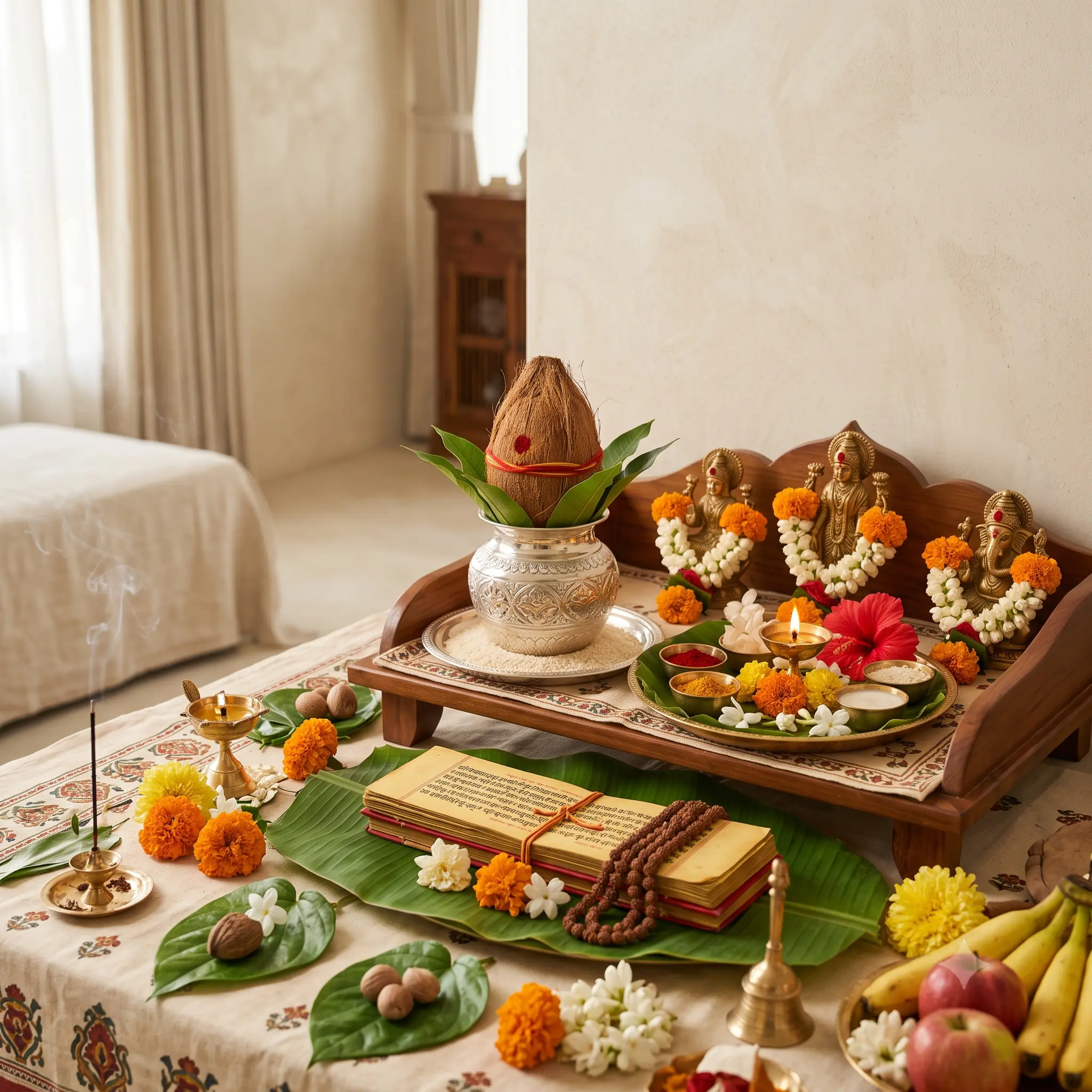

Rudrabhishek is one of the most loved Shiva rituals. The Shivling is bathed with sacred substances while the Sri Rudram, a hymn from the Yajurveda, is chanted. It is performed to seek Lord Shiva's blessings for peace, health and the removal of obstacles, and it is a common choice at a new beginning or a time of difficulty.
Key takeaways
- Rudra is a fierce and compassionate form of Shiva. Abhishek means ritual bathing, so Rudrabhishek is the bathing of Shiva in his Rudra form.
- The chant is the Sri Rudram, with its Namakam and Chamakam sections, recited by a trained pandit.
- Common offerings include water, milk, curd, honey, ghee, sugar, bilva leaves and white flowers.
- Popular occasions are Mondays, Pradosh, Sawan (Shravan) and Maha Shivratri, though it can be done on any suitable day.
What does Rudrabhishek mean
Rudra, "the one who removes sorrow", is a name of Shiva. The Sri Rudram, from the Yajurveda, has two parts. The first, the Namakam (eleven sections), bows to Rudra in many forms ("namah" appears again and again); the second, the Chamakam, asks for the things a household needs: health, food, wisdom, harmony and strength. The ritual combines the sound of the chant with the physical act of pouring water and other offerings over the Shivling.
What is offered and why
- Water (jal): purity and cooling. Usually offered first.
- Milk: nourishment and calm.
- Curd: wellbeing.
- Honey: sweetness in speech and life.
- Ghee: strength and vitality.
- Sugar or sugar water: pleasantness and harmony.
- Bilva (bel) leaves: a leaf dear to Shiva, offered with three leaflets intact.
- White flowers, sandalwood and bhasma: simplicity and detachment.
The first five of these together are called Panchamrit. Particular wishes are sometimes linked to particular substances, and your pandit can advise, but the heart of the ritual is faith and a calm mind, not a long list.
Samagri checklist
- A Shivling (or Shiva image), a clean thali and a copper or brass vessel
- Water from a clean source, raw cow milk (or any pure milk), curd, honey, ghee and sugar
- Bilva leaves, white flowers, sandalwood paste, bhasma
- Roli, akshat, incense, camphor and a lamp
- Fruit, a sweet and a clean cloth
A ready Rudrabhishek samagri kit collects most of these in one package.
Vidhi, step by step
- Preparation: clean the space, set up the Shivling on a plate and place the kalash.
- Sankalp: the pandit helps the family state their intention and name.
- Ganesh pooja: invoked first, as in every ritual.
- Abhishek: water, then milk, curd, honey, ghee and sugar water in turn, with a pure water rinse between substances, while the Sri Rudram is chanted.
- Shringar: sandalwood, bhasma, bilva leaves and flowers are offered.
- Naivedya and aarti: fruit and sweet are offered and the aarti is sung.
- Prasad and dakshina: the family receives prasad and the pandit is given dakshina.
A simple Rudrabhishek takes about an hour to two. A fuller version with repeated chanting (Ekadash Rudri) takes longer and involves several pandits.
When to perform it
- Mondays, Shiva's day.
- Pradosh, the evening of Trayodashi. See our guide to Pradosh Vrat.
- Sawan (Shravan) month and Maha Shivratri, the most popular times.
- Before a new home, business or major undertaking, as part of the preparation.
Many pandits also check "Shiva Vaas", a calendar reading of where Shiva is said to reside on a given day, before fixing a Rudrabhishek. Ask your pandit if it applies to your tradition.
What to expect
Rudrabhishek is an act of devotion, not a guarantee of results. Families often describe it as a time of calm and focus, and it is a meaningful way to begin something important. It does not replace medical, legal or financial advice where those are needed.
Frequently asked questions
Can Rudrabhishek be done at home?
Yes. Many families host it at home with a pandit. Temples also offer it, and online pandits can conduct it for families abroad.
Who can perform it?
Anyone can. The yajaman (the person doing the sankalp) is usually the head of the household, but men and women of all ages may participate.
Is milk wasted in the process?
Many families collect the milk and water from the abhishek and use it for plants, or use only the amount needed. It is a respectful practice to avoid waste.
To book a pandit, see our Rudrabhishek pooja page.
Looking for personalised guidance?
Speak with an Āchārya, or plan a ceremony with a pandit.