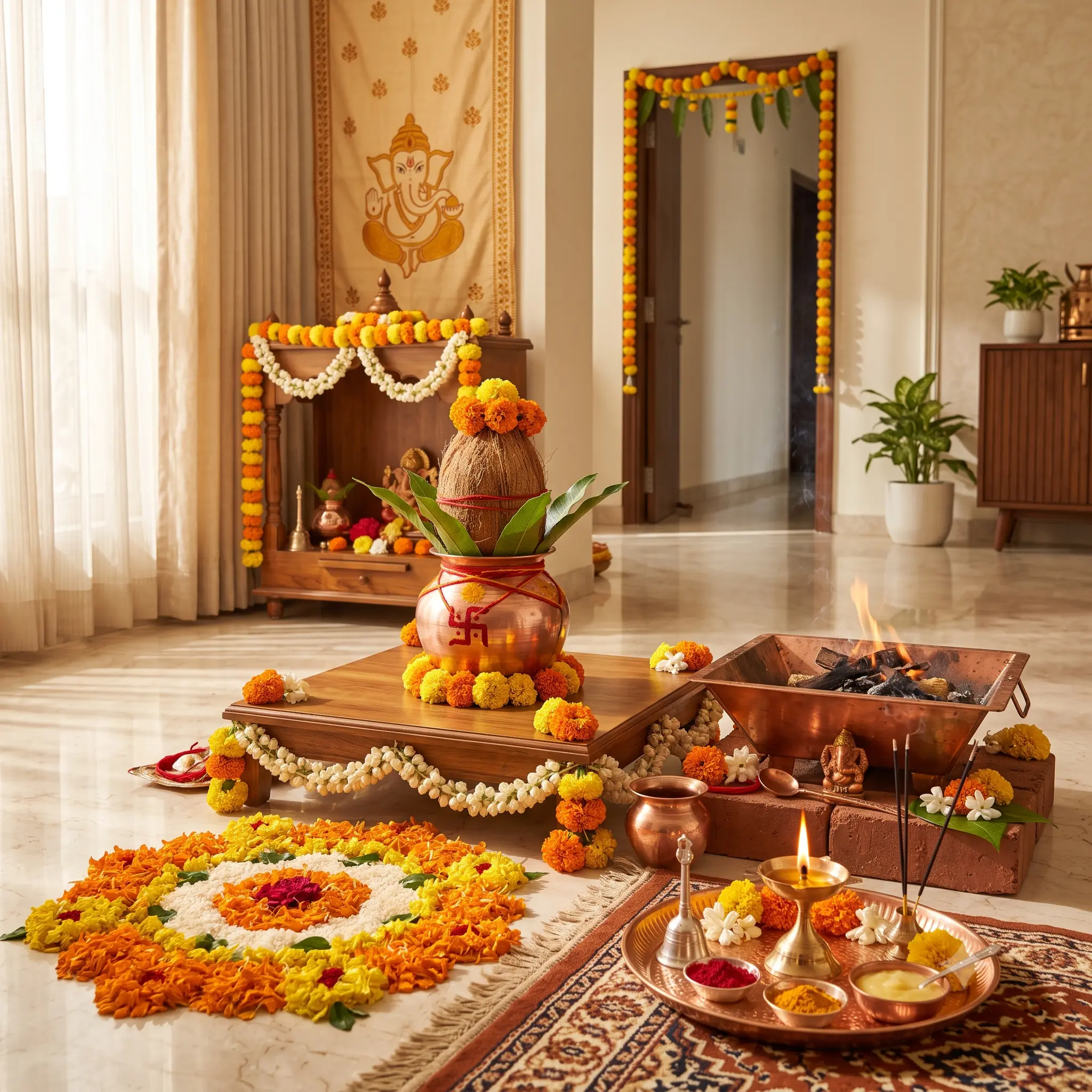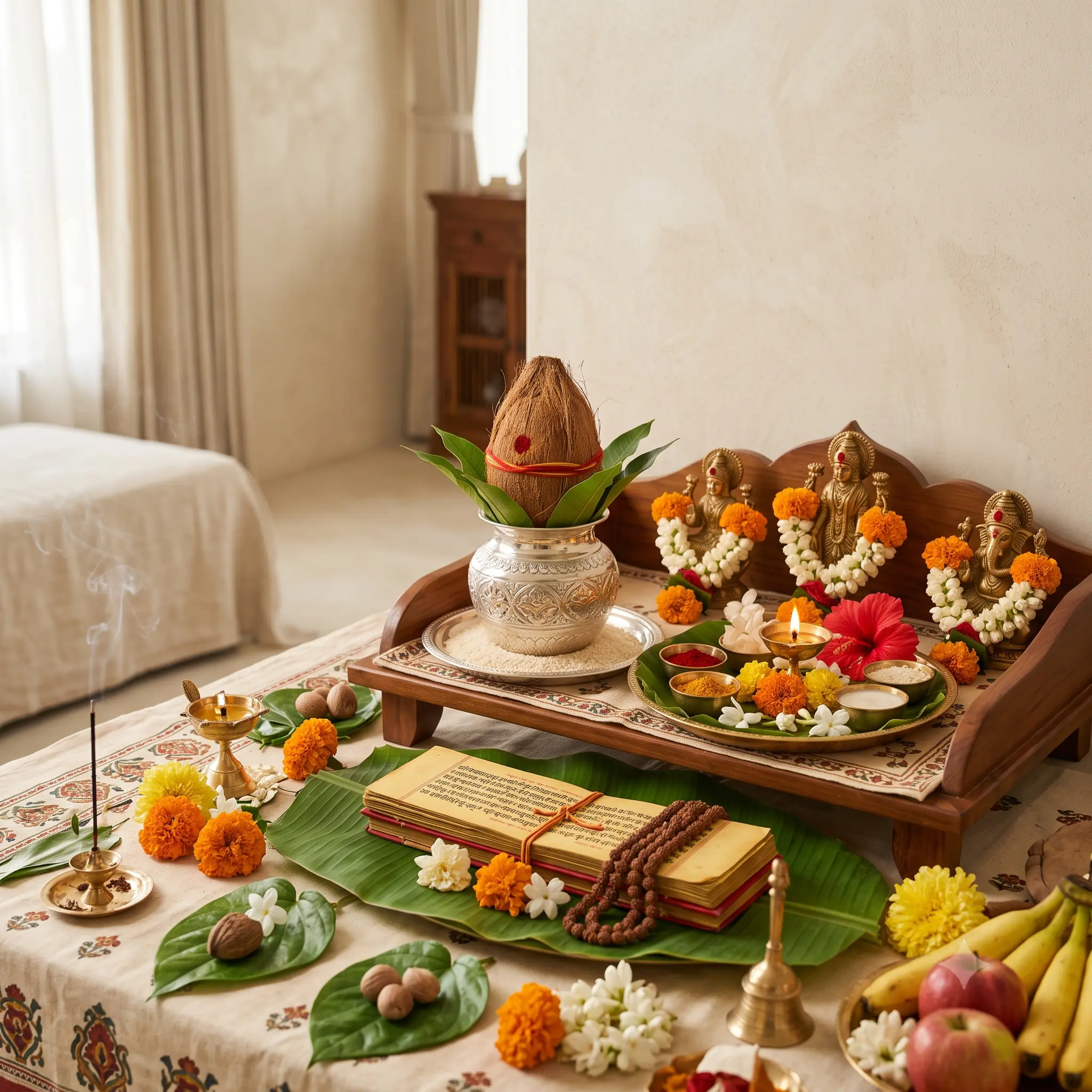

A havan is central to many ceremonies, including Griha Pravesh and Naamkaran. But a flame and smoke indoors are a real concern in an apartment, with shared walls, smoke alarms and strict rules. This guide explains how to plan sensibly, and what to do when a full havan is not possible.
Key takeaways
- Safety and respect for neighbours come first. Check your lease, building rules and local fire guidance before planning a havan indoors.
- A small kund, dry samidha, a ventilated room and water nearby make a modest havan practical in many homes.
- If an indoor havan is not allowed, a ghee lamp, a camphor aarti, a symbolic offering and mantras are accepted by many pandits.
- Outdoor options, such as a patio, a backyard, a park or a temple hall, work for many families. Check the rules first.
Check the rules first
- Read your lease and building rules. Some prohibit open flames or incense.
- Speak to your landlord, building manager or neighbours, and tell them the date and time.
- If you plan to hold it in a community hall or a park, check the booking rules on fire and fuel.
- Check your home insurance conditions if you are unsure.
Preparing a safe, small havan
- Space: choose a room with a window or a door that opens, and clear the area of curtains, paper and flammable items. Place a heat-proof base such as a metal tray with sand under the kund.
- Kund: use a small copper or brass kund rather than a large one.
- Fuel: use dry samidha, such as mango or other suitable wood, in small pieces. Avoid wet wood, which smokes more.
- Ghee and samagri: use ghee sparingly, as the flame rises when it is poured. Keep the samagri dry.
- Ventilation: open windows and use a fan to push air outward. Do this before the havan starts.
- Safety kit: keep a bowl of water, a damp cloth and a fire extinguisher within reach, and an adult assigned to watch the flame.
- Children and pets: keep them at a safe distance.
Dealing with smoke alarms
Smoke alarms are there for safety. Ventilation and a small fire reduce the chance they trigger, but they may still sound. Do not disable an alarm in a shared building without permission, and never remove the batteries in a way that leaves the home unprotected. If the alarm is in an apartment with a central system, tell the building management beforehand. If you cannot avoid the alarm, choose an alternative.
Alternatives when a havan is not possible
- Ghee lamp and camphor aarti: a small lamp (diya) with ghee and a camphor aarti carries the sacred fire.
- Symbolic havan: ahutis (offerings) are made with mantras into a small lamp or into a steel bowl with a little camphor and ghee, as your pandit advises.
- Havan at a temple or community hall: many temples provide facilities for homas. You can do the main ceremony at home and the havan at the temple.
- Backyard or patio: where permitted and safe, the havan can be held outdoors. Check local burn rules, especially in dry weather.
- Mantra and japa: chanting the mantras with a mala and the pandit's guidance is meaningful on its own.
Ask your pandit what is acceptable in your tradition. Many accept a modified form when safety or rules require it.
Where havan appears in ceremonies
- Griha Pravesh abroad, where the havan is optional for many families.
- Naamkaran and Mundan, where a small havan is common.
For samagri, see our guide to puja samagri abroad.
Frequently asked questions
Is a havan allowed in a rented apartment?
It depends on your lease and local rules. Ask the landlord or building manager, and choose an alternative if the answer is no.
Is incense also a problem?
It can trigger smoke alarms and bother neighbours. Use less, open a window, or use a lamp instead.
Does the ceremony remain valid without a havan?
Many pandits consider a ceremony with a lamp, mantras and offerings to be valid and meaningful. Ask your pandit what suits your tradition.
Looking for personalised guidance?
Speak with an Āchārya, or plan a ceremony with a pandit.