Having a baby abroad is joyful, and also a little confusing when it comes to ceremonies. Grandparents are far away, the hospital asked for a name on the very first day, and the family wants to do the Naamkaran properly. This guide covers the questions NRI parents ask most.
Key takeaways
- The naming ceremony is traditionally held around the 11th or 12th day, but many families hold it within the first month or two to suit work and travel.
- The nakshatra and its starting syllable come from the baby's exact birth time and place, in local time.
- You may need a legal name for the birth certificate earlier. The ceremony can still announce or confirm the name later.
- Elders can take part by video, and a pandit can guide the ceremony remotely or in person.
Timing for families abroad
The classical texts describe the naming on the 10th, 11th or 12th day after birth, after the period of ritual impurity (sutak) is over. In practice, families abroad often pick the nearest weekend. If you are doing it later than the 12th day, that is common and accepted, and your pandit can choose a favourable muhurat. Read our guide on Naamkaran meaning and timing for the full background.
Getting the nakshatra right
The baby's nakshatra and pada (quarter) decide the first syllable many families look for in a name. It depends on the time of birth and the place. Use the time written on the hospital record, in the local time zone, and the city of birth. Keep a copy of the birth time, as a slightly different time can change the pada. If you are unsure, a kundali or a short consultation will tell you. Our explainer on the kundali, lagna, rashi and nakshatra can help you understand the terms.
The birth certificate and the Naamkaran name
- Hospitals and local authorities often need a name within days or weeks of the birth. Many families register a name first and then hold the Naamkaran.
- If you wish the ceremony name to match the legal name, choose it before the paperwork is submitted. Changing a legal name later takes more effort.
- Some families keep a private nakshatra name for ceremonies and use another name every day. Both are fine.
- Also think about the name in the country you live in: spelling, pronunciation and how it appears on forms.
Doing it at home abroad
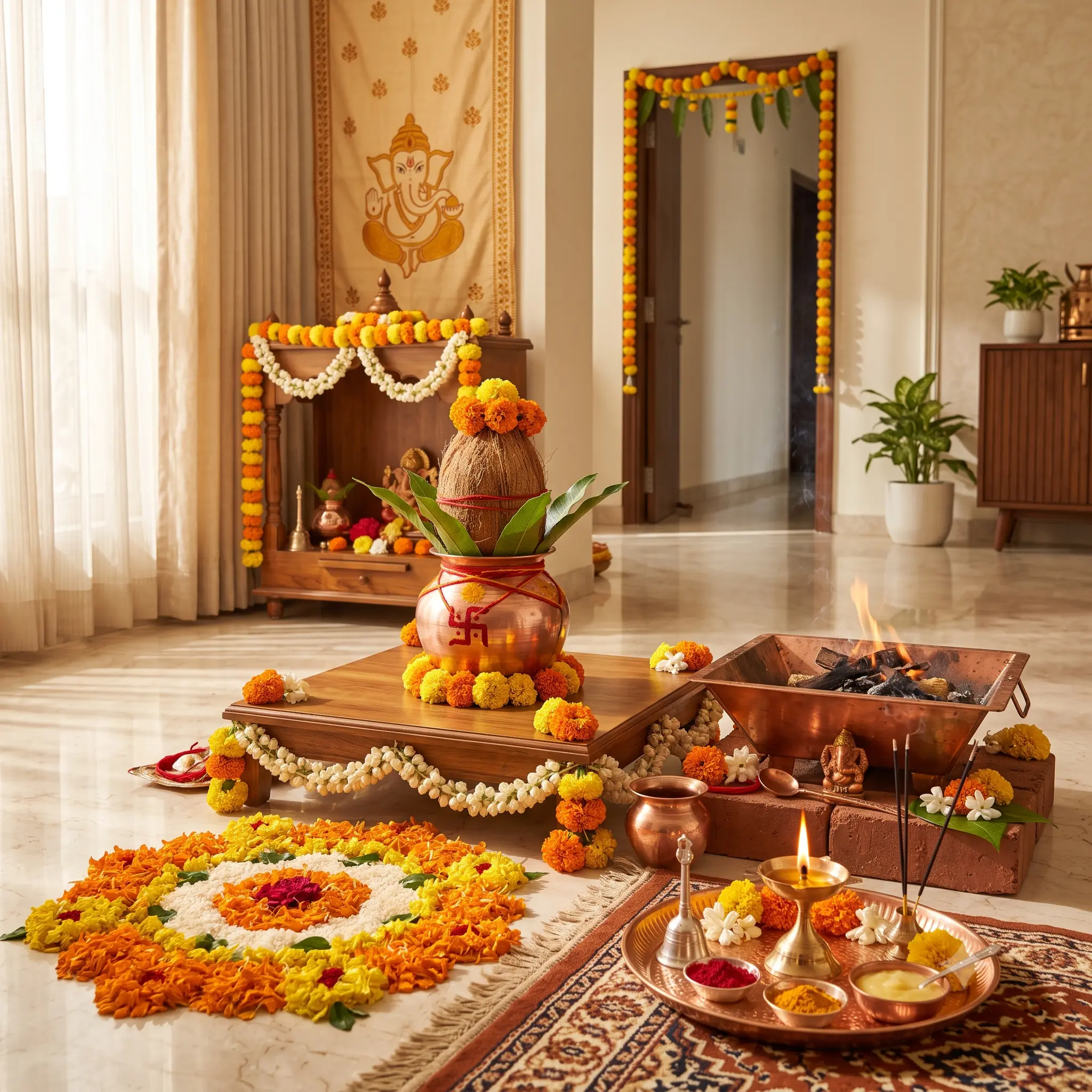
- Choose a clean, quiet space and decorate it with flowers and a rangoli.
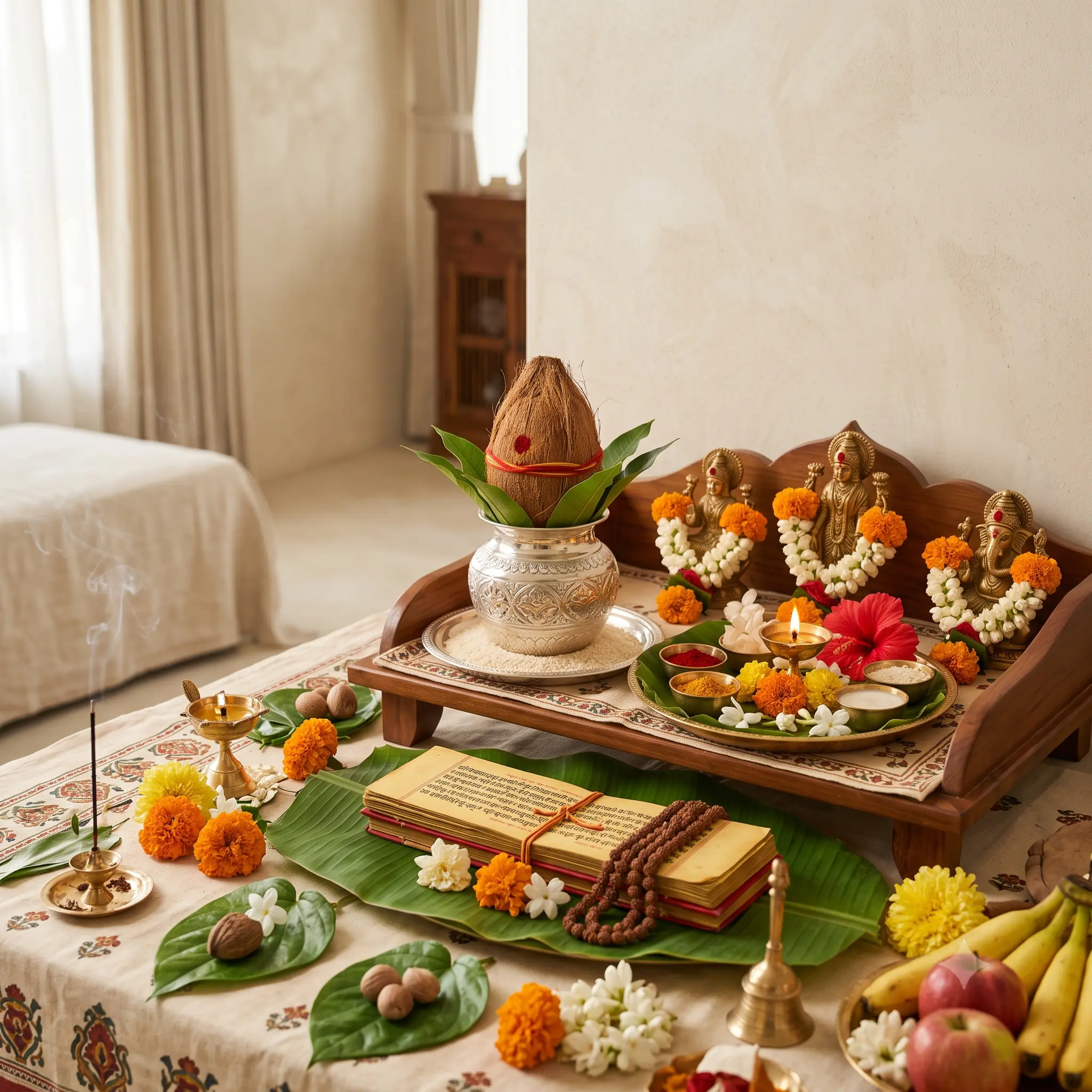
- Set up Ganesha, a kalash, a ghee lamp and the other items the pandit asks for.
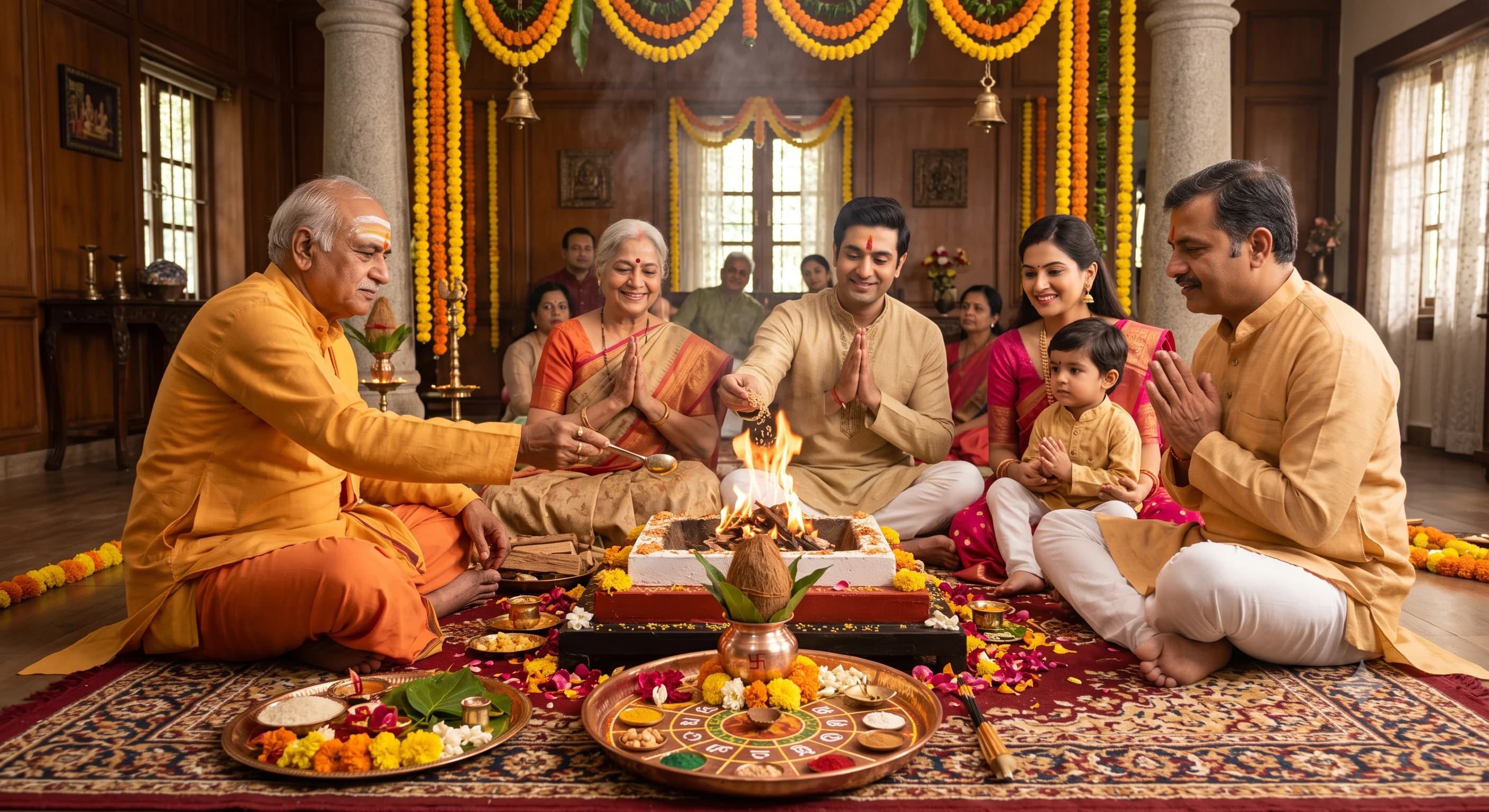
- The pandit performs Ganesh pooja, Navagraha pooja and a short havan if possible.
- The father or an elder whispers the name into the baby's right ear, and it is announced.
- Elders give blessings. Share prasad.
If you cannot do a havan in an apartment, see our guide to havan alternatives abroad. A samagri checklist is in our Mundan and Naamkaran kit.
Including grandparents by video
- Agree a time that works in both time zones, and share the call link in advance.
- Set up the phone or laptop so that grandparents can see the baby, the lamp and the pandit.
- Ask grandparents to offer their blessing aloud, and to be present at the moment of naming.
- Record the ceremony, if the pandit and guests agree, so it can be kept in the family archive.
Choosing a pandit
You may have a local pandit, or you may arrange one through a service. See our checklist on how to choose a pandit abroad, or look at our Naamkaran guide and support for NRI families.
Frequently asked questions
Can we do Naamkaran when the baby is a few months old?
Yes. Many families do. Confirm an auspicious muhurat with your pandit.
Does the baby need to be present?
Yes, the baby is the centre of the ceremony. Keep it short, and schedule it around feeds and naps.
What if we already named the baby at the hospital?
You can still hold the ceremony and announce the name, or choose a nakshatra-based name for ceremonial use.
Looking for personalised guidance?
Speak with an Āchārya, or plan a ceremony with a pandit.